
Does Renters Insurance Cover Water Damage?
Here’s what you need to know about water damage and your renters insurance coverage.


Here’s what you need to know about water damage and your renters insurance coverage.
Let’s start with some good news. For a lot of water-related damages, such as burst pipes or leaking appliances, you’ll be covered by your renters insurance policy.
Your insurance might additionally step in if your apartment becomes temporarily uninhabitable, or if water from your home damages surrounding apartments.
However, some common scenarios, such as flooding and water damage due to negligence, are generally excluded from your insurance coverage.
 TL;DR
TL;DR
For more answers, including where your responsibility ends and your landlord’s responsibility begins, let’s take a deep dive into how your renters insurance relates to water damage.
Water damage is one of the main covered perils under a standard renters policy, but only when it’s caused by a sudden, accidental event. Damage from general wear and tear or negligence is generally not covered.
Renters insurance does not cover flooding from outside sources
Some examples of covered cases:
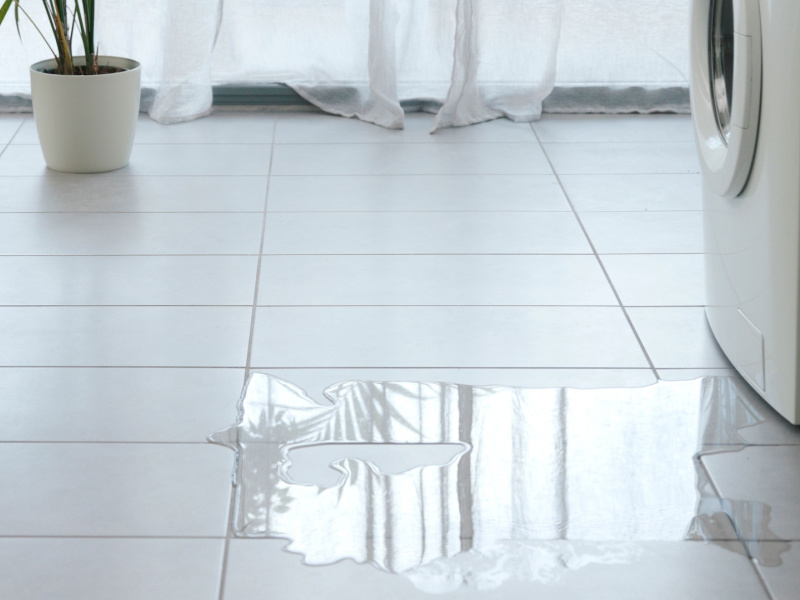
If a washing machine hose bursts and ruins your couch, guitar, and vintage record player, the damage falls under the personal property section of your renters policy. Your belongings are generally covered up to your policy’s coverage limit, minus your deductible.
For high-value items like jewelry, cameras, expensive bikes, or fine art, you may need Extra Coverage to be compensated for the full value of your property.
Personal property coverage applies to your own belongings only. Damage to the building’s structure or any furniture owned by your landlord isn’t covered under your renters policy, that falls under your landlord’s insurance.
The same logic applies to mold. Mold in your apartment’s walls isn’t covered by renters insurance, but mold that damages your personal belongings and is caused by a covered peril like a burst pipe may be covered.
If a leak from your unit spreads to your neighbor’s apartment, your renters insurance liability coverage will likely cover their damage too – so you won’t be stuck negotiating with your neighbor over who pays for their ruined stuff.
That said, if the leak originated from a water line maintained by the building rather than something in your unit, you’re unlikely to be held responsible for your neighbor’s damages.
Unsafe conditions, spreading water damage, furniture that can’t be used – there are a lot of water-related reasons you might have to leave your home temporarily. If that happens, most standard renters policies will help cover additional living expenses like temporary housing and meals, and may even help you find a new permanent residence. This falls under your policy’s loss of use coverage.
Sometimes the best way to understand how renters insurance works is to see it in action. Here are a few situations that show when coverage kicks in when you’re insured with Lemonade, and when it doesn’t.
Situation: Morgan’s washing machine hose burst while she was at work. By the time she got home, her living room was flooded. Her $1,200 couch, $800 laptop, and $400 record collection were all damaged beyond repair.
Coverage decision: Covered.
Reasoning: A burst appliance hose is a sudden, accidental event, exactly the kind of water damage a standard renters policy covers under personal property coverage.
Outcome: Morgan had a $500 deductible and $25,000 in personal property coverage. After her deductible, she received $1,900 to replace her damaged belongings.
| Without renters insurance | With renters insurance | |
|---|---|---|
| What Morgan pays | $2,400 (full replacement) | $500 (deductible only) |
| What Morgan gets back | $0 | $1,900 (after deductible) |
Situation: A cold snap caused a pipe in Ryan’s apartment to burst overnight, flooding his bedroom and destroying his mattress ($900), clothing ($600), and a portable speaker ($200).
Coverage decision: Covered.
Reasoning: Burst pipes caused by sudden temperature drops are a covered peril under standard renters insurance. The damage was accidental and unexpected, not the result of neglected maintenance.
Outcome: Ryan had a $250 deductible and $20,000 in personal property coverage. After his deductible, he received $1,450 to cover his damaged belongings.
| Without renters insurance | With renters insurance | |
|---|---|---|
| What Ryan pays | $1,700 (full replacement) | $250 (deductible only) |
| What Ryan gets back | $0 | $1,450 (after deductible) |
Situation: A slow leak under Dana’s kitchen sink went unnoticed for a few days before water seeped through the floor and damaged her downstairs neighbor’s ceiling and furniture. The neighbor filed a claim against Dana for $3,800 in damages.
Coverage decision: Covered under liability, with an important catch.
Reasoning: Dana’s renters insurance liability coverage applies when water damage from her unit damages a neighbor’s property. However, because the leak had been visible for several days before Dana reported it, her insurer reviewed whether negligence was a factor. In this case, Dana hadn’t noticed the leak because it was hidden under the sink, so the claim was approved.
Outcome: Dana’s $100,000 liability coverage paid the neighbor’s $3,800 claim in full. Dana paid nothing out of pocket.
| Without renters insurance | With renters insurance | |
|---|---|---|
| What Dana pays | $3,800 (neighbor’s full damages) | $0 |
| What Dana gets back | $0 | Full claim covered under liability |
Situation: After a major storm, water seeped into Jordan’s ground-floor apartment through the building’s foundation. His area rug ($600), bookshelf ($300), and several boxes of belongings ($500) were damaged.
Coverage decision: Not covered.
Reasoning: Water damage caused by outside flooding, including rainwater entering through the foundation, is excluded from standard renters insurance policies. Flood insurance is a separate policy, typically available through a standalone provider.
Outcome: Jordan had to replace his belongings entirely out of pocket. A separate flood insurance policy would have covered the damage.
| Without renters insurance | With renters insurance | With flood insurance | |
|---|---|---|---|
| What Jordan pays | $1,400 (full replacement) | $1,400 (not covered) | Covered, minus flood policy deductible |
| What Jordan gets back | $0 | $0 | Replacement cost of damaged items |
Situation: A clog caused Taylor’s toilet to overflow while she was getting ready for work. Water spread across the bathroom floor and into the hallway, damaging her bathroom cabinet ($250) and hallway rug ($180).
Coverage decision: Covered.
Reasoning: Toilet overflows caused by a sudden, accidental clog are covered under a standard renters policy as a named peril. Because the overflow was immediate and Taylor addressed it right away, negligence wasn’t a factor.
Outcome: Taylor had a $250 deductible. The total damage came to $430, so after her deductible, she received $180 back. Small claim, but without renters insurance, she would have paid the full $430.
| Without renters insurance | With renters insurance | |
|---|---|---|
| What Taylor pays | $430 (full replacement) | $250 (deductible only) |
| What Taylor gets back | $0 | $180 (after deductible) |
Your renters insurance policy doesn’t cover water damage in the following scenarios:
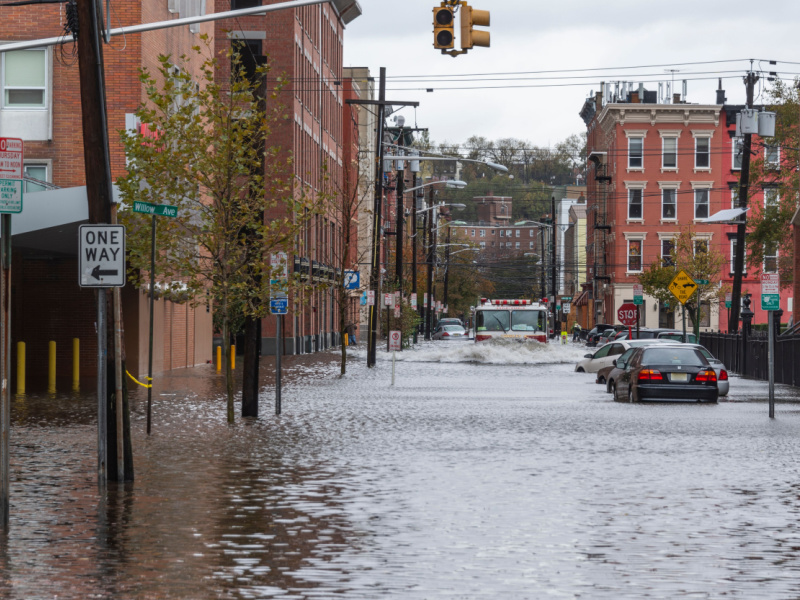
Renters and homeowners insurance policies generally don’t cover flooding from the outside. Instead, flood insurance is sold as a standalone policy.
If you’re a renter living in a flood-prone area, it may be worth looking into taking out a flood insurance policy to protect your personal property from any potential damage.
Hope you’ve eaten breakfast before this mental image: If any water flows back into your house from your sewers, drains, or drainage system, such as a sump pump, the damage won’t be covered by your basic policy. However, we can add endorsements to your policy that would cover these scenarios. Just ask.
If all the signs were there, for instance, the constant drip, drip, drip of a leaky pipe, and no one did anything to prevent the water from spreading, your insurance company might not cover the damage. It depends on the specific circumstances. (For instance, did you spot a leak and avoid flagging it to your landlord? Did you report a leak and your landlord didn’t do anything to fix it?) Read more about your rights as a renter here.
Generally, the answer is yes. Your renters policy covers leaky ceilings and subsequent damage to your stuff. Damage to the roof itself falls under your landlord’s responsibility (or in that case, their insurance), your renters coverage is limited to your belongings.
However, you’re only covered in the case of a sudden, unexpected damage. So if it rains into your house because a windstorm, hail, ice ,or sleet created a hole in one of the walls or the roof of the building, your insurance would likely cover the damage to your belongings.
But if you’ve forgotten to close your windows and your things got destroyed by rain, this wouldn’t be covered (since you’re negligent in this scenario). There might also be issues with coverage if your leak itself is very old and hasn’t been properly maintained by your landlord.
The short answer is: Yes. Damage from overflowing toilets (eek) or leaking bathtubs are generally covered under your renters policy.
Just remember to be diligent about not flushing things down the toilet that don’t belong there or leaving your tub running too long. Even if renters insurance can help, dealing with these scenarios can cause a real headache.
Yes! Picture this: One of your pipes bursts, floods your apartment, and destroys most of your stuff in one go. Extremely unfortunate, but luckily covered by your renters policy.
If, alternatively, your pipe broke due to an existing maintenance issue (which your landlord was aware of), but chose to ignore, they’d be the one liable.
There’s no full-proof way to avoid water damage. But there are definitely a few hacks that can decrease the risk (and keep your renters insurance costs down). Let’s take a look:
Preventing water damage is part of being a responsible renter, as is getting renters insurance, which you can get from Lemonade, with prices starting as low as $5/month.
Yes. Renters insurance can help cover the costs to repair or replace your belongings and the cleanup if your pipes turn into icy popsicles and cause a mess in your apartment when they burst.
Standard renters insurance does not cover flooding from natural disasters. If you’re concerned about flooding, consider purchasing a standalone flood insurance policy to ensure your belongings are protected.
As soon as you discover any signs of water damage, whether it’s from a leaking appliance or a burst pipe, it’s recommended to file your claim promptly. The sooner you do, the faster you can get back to your cozy, dry space.
It depends on where the water came from.
If your basement floods because of a burst pipe or leaking appliance, your renters insurance typically covers damage to your belongings. But flooded basements caused by heavy rain, storm surge, or groundwater seeping in from outside? That’s considered a “flood”, and standard renters insurance doesn’t cover it.
Sewer or drain backups are also excluded by default, though you can add a water backup endorsement for that.
If you’re in a flood-prone area, a separate flood insurance policy is the way to go. Not sure what applies to your situation? Check your policy or reach out to us.
A few quick words, because we <3 our lawyers: This post is general in nature, and any statement in it doesn’t alter the terms, conditions, exclusions, or limitations of the policies issued, which differ according to your state of residence. You’re encouraged to discuss your specific circumstances with your own professional advisors. The purpose of this post is merely to provide you with info and insights you can use to make such discussions more productive! Naturally, all comments by, or references to, third parties represent their own views, and Lemonade assumes no responsibility for them. Coverage may not be available in all states. Please note that statements about coverages, policy management, claims processes, Giveback, and customer support apply to policies underwritten by Lemonade Insurance Company or Metromile Insurance Company, a Lemonade company, sold by Lemonade Insurance Agency, LLC. The statements do not apply to policies underwritten by other carriers.
Please note: Lemonade articles and other editorial content are meant for educational purposes only, and should not be relied upon instead of professional legal, insurance or financial advice. The content of these educational articles does not alter the terms, conditions, exclusions, or limitations of policies issued by Lemonade, which differ according to your state of residence. While we regularly review previously published content to ensure it is accurate and up-to-date, there may be instances in which legal conditions or policy details have changed since publication. Any hypothetical examples used in Lemonade editorial content are purely expositional. Hypothetical examples do not alter or bind Lemonade to any application of your insurance policy to the particular facts and circumstances of any actual claim.