
Best Places to Live for Remote Workers: 10 U.S. Cities Worth Considering in 2026
Salary data, cost comparisons, and honest takes on the cities that actually work for remote life.


Salary data, cost comparisons, and honest takes on the cities that actually work for remote life.
The best U.S. city for remote workers isn’t just the one with the fastest Wi-Fi. It’s the one where your salary goes far enough, you can actually find community, and you don’t spend your whole day commuting, because you chose not to, not because you have to.
This list is not ranked. Each city stands out for a different type of remote worker, from affordability to lifestyle to job market access.
 TL;DR
TL;DR
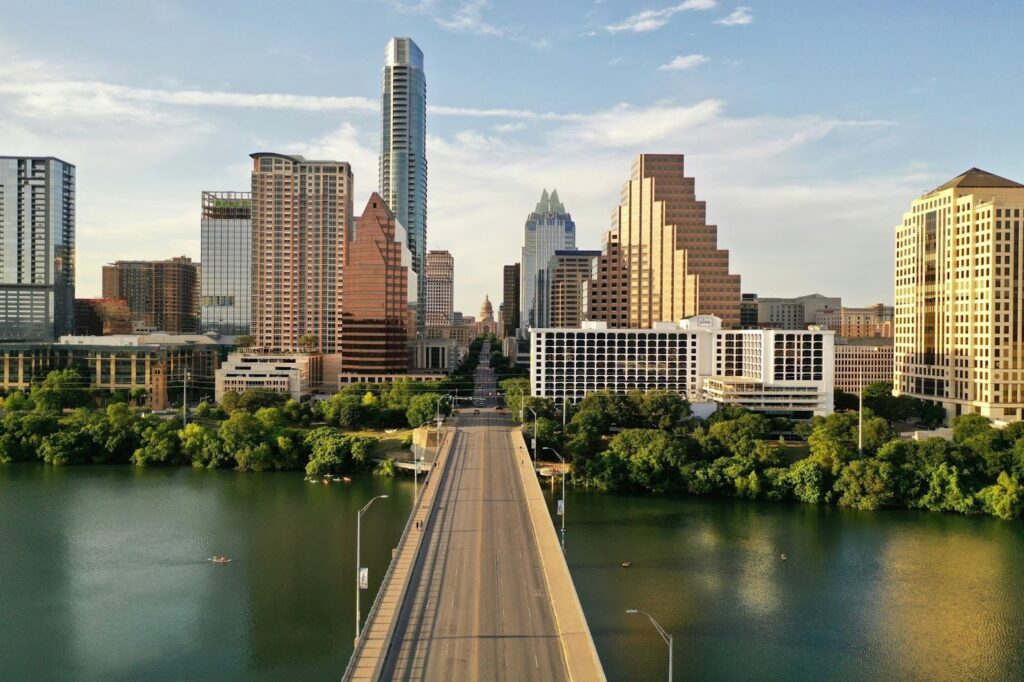
Austin is one of the few cities where the tech scene and the creative scene actually overlap. Coffee shops are built for staying, not just grabbing and going, and you’ll run into other remote workers without really trying.
There’s no state income tax, which stretches your take-home further than the numbers suggest. And while traffic has gotten worse as the city’s grown, most remote workers sidestep rush hour entirely. That’s the whole point of flexible work, right?
The cost of living is rising, but it’s still well below what you’d pay in San Francisco or New York for comparable energy and opportunity.
Best for: Tech workers, creatives, people who want a real community without paying a premium for it.
If you’re planning the move, it’s worth sorting out renters insurance in Austin before the boxes arrive, especially if you’re setting up a home office.
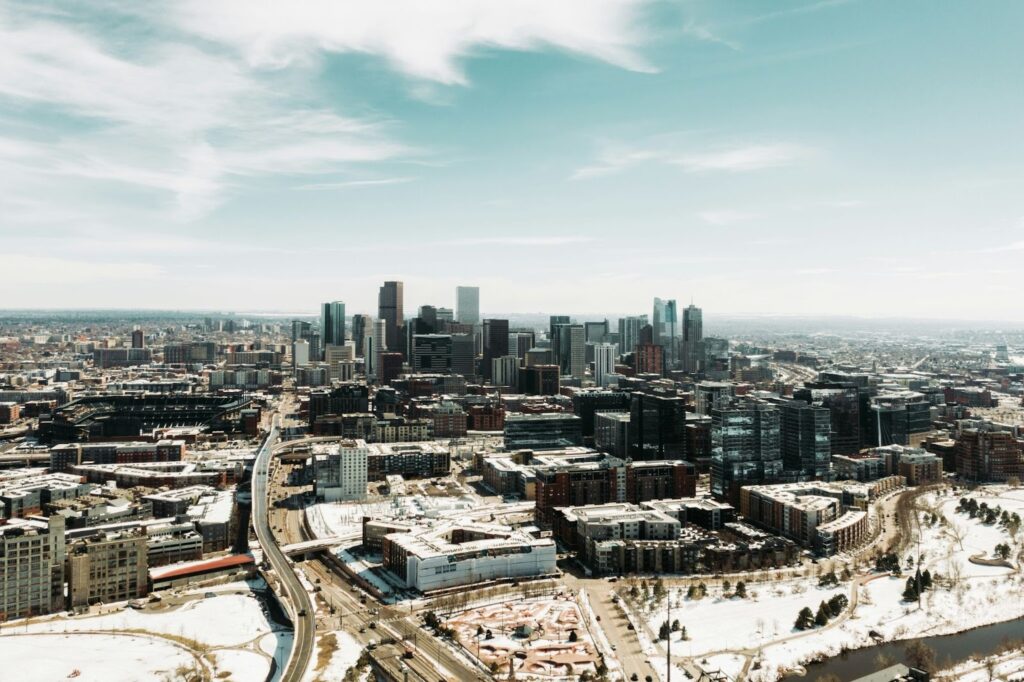
Denver’s pitch is simple: close your laptop, and the Rockies are right there. You can ski or mountain bike on a weekend without turning it into a whole production. That kind of work-life balance is harder to find than people admit.
The city itself is solid. Walkable neighborhoods, free downtown Wi-Fi, low crime, and coworking spaces that are actually good. People are genuinely friendly, not just in a surface-level way.
The altitude is real, by the way. Drink more water than you think you need.
Best for: Outdoorsy types, anyone who needs nature to reset, people tired of paying coastal rent for a landlocked lifestyle.
If you’re bringing gear like bikes, skis, or camera equipment, renters insurance in Denver is worth having before your first weekend adventure.
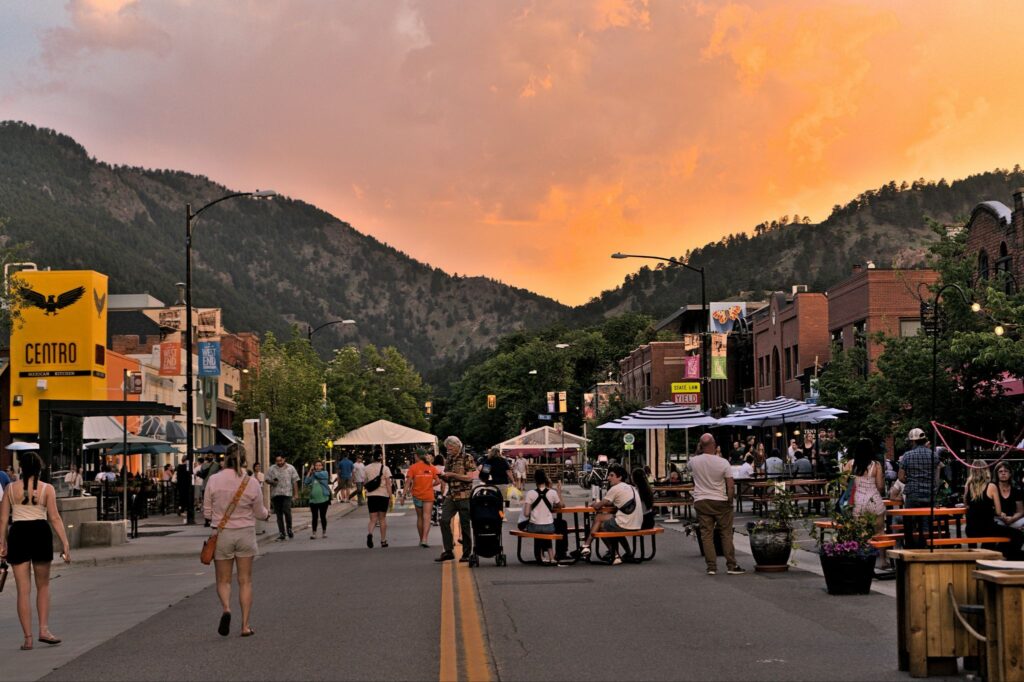
Boulder takes everything good about Denver and compresses it into a smaller, more walkable package. Hiking trails start at the edge of town. The Pearl Street Mall has solid coffee shops where remote workers are a normal sight. And the University of Colorado keeps the city lively with startup events, lecture series, and a steady rotation of interesting people.
It’s a smaller city, but it punches above its weight on tech companies and coworking options. If your ideal day is a morning deep work session followed by a trail run, Boulder is basically built for that.
One heads up: it’s not cheap for a smaller city. The mountain access comes at a price.
Best for: Serious outdoor enthusiasts, health-focused remote workers, people who want small-town feel with real career infrastructure nearby.
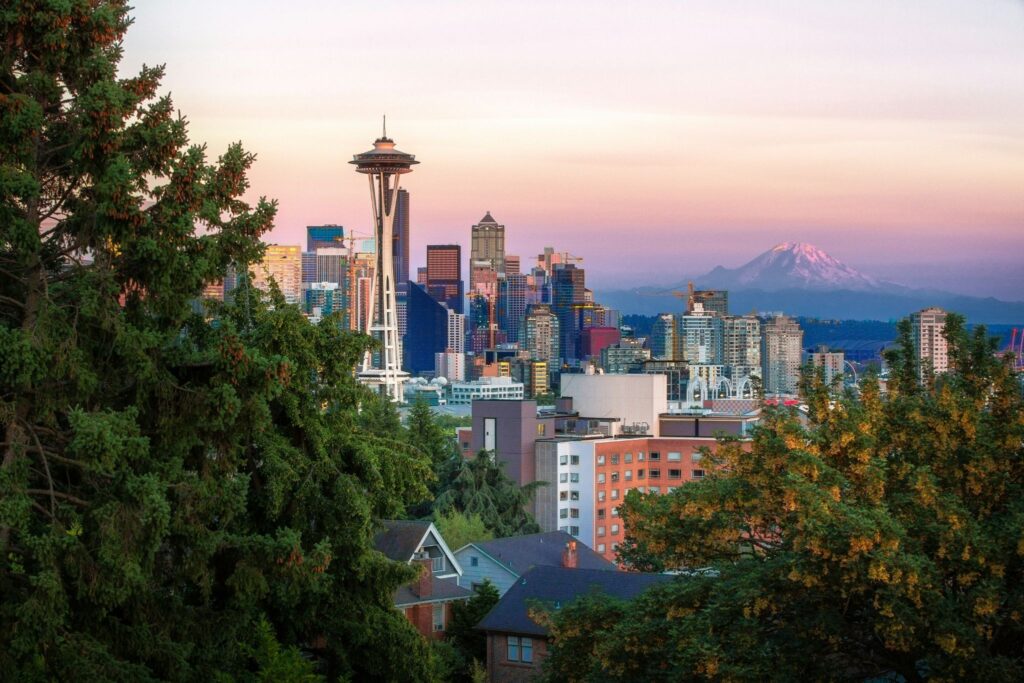
Seattle has the highest percentage of remote workers on this list, and it shows. The coffee shop culture here isn’t just a vibe. Every neighborhood has cafes that are genuinely designed for working, not the kind where the staff side-eyes you after your second hour.
Yes, it’s cloudy. A lot. But the upside is that you never feel guilty staying inside to work, and when the sun comes out, the city is genuinely beautiful. Hiking trails are accessible from the city, and Puget Sound is right there.
No state income tax also helps offset the rent, which is high but still below San Francisco or NYC levels.
Best for: Coffee lovers, people who do their best work on grey days, anyone who wants city life with easy nature access.
If you’re setting up a home office, renters insurance in Seattle makes sense. Pacific Northwest storms have a way of reminding you your gear isn’t waterproof.
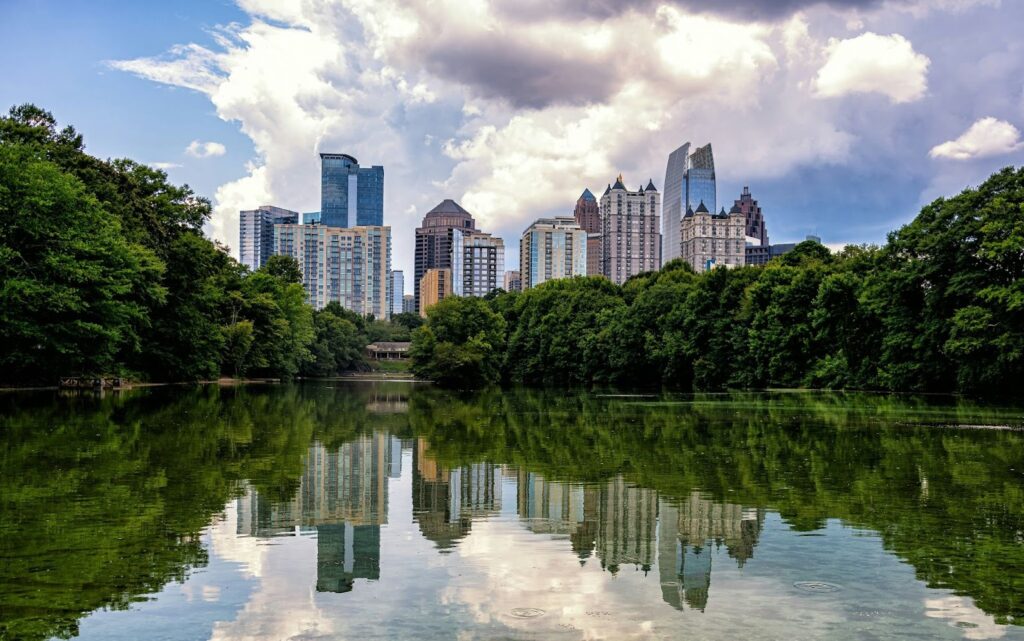
Atlanta gives you a real major city with a big food scene, walkable neighborhoods like Midtown and Inman Park, and plenty of coworking options, without the price tag that usually comes with it. The cost of living is noticeably lower than most cities on this list, and your salary goes further here than almost anywhere else in the South.
It’s also one of the busiest airport hubs in the country. If your remote work comes with occasional travel, or you just want to visit family without a three-connection nightmare, Atlanta makes that easy.
Summers are hot and humid. That’s just the deal. But the rest of the year is mild, and the food scene alone is worth it.
Best for: People who want urban amenities on a reasonable budget, foodies, anyone who travels frequently for work or personal reasons.
If this Southern gem fits your remote work dreams, you’ll want to check out renters insurance in Atlanta to protect your belongings while you explore the city’s incredible food scene.

World-class coworking spaces, 24/7 infrastructure, Central Park on nice days, and no car needed anywhere. The subway gets you where you’re going. The energy is real, and if you thrive on density and momentum, no other city on this list compares.
The key is going in clear-eyed about cost. A solid income or a roommate situation (or both) makes it doable. But don’t try to live like you’re in Charlotte on a New York budget.
Best for: People who thrive on energy and stimulation, culture lovers, anyone who wants to be close to where decisions get made across media, finance, or tech.
NYC apartments are small and expensive. Renters insurance is a smart call. It covers your stuff without adding much to the monthly budget. Make sure to research renters insurance in New York City to protect your investment.

San Francisco still has the highest average salary on this list, and the tech networking here is in a category of its own. Coffee shop conversations turn into job leads. Side projects find co-founders. Even casual coworking feels professionally productive in a way that’s hard to replicate elsewhere.
The internet infrastructure is the best in the country, fast, reliable, and widespread. Coworking spaces are everywhere and range from bare-bones functional to genuinely impressive.
The tradeoff is honest: rent is steep, the cost of living will take a real bite out of that top-line salary, and the city has had a complicated few years. But if you’re in tech and want direct access to the people and companies driving the industry, it’s still hard to argue with the geography.
The weather, for what it’s worth, is genuinely great. Mild year-round with almost no humidity.
Best for: Tech workers who prioritize career access and networking, high earners who can absorb the cost of living, people who want reliable infrastructure and mild weather.
If you’re ready to join the tech capital of the world, consider exploring renters insurance in San Francisco, to protect your valuable tech equipment and belongings in this high-cost city.
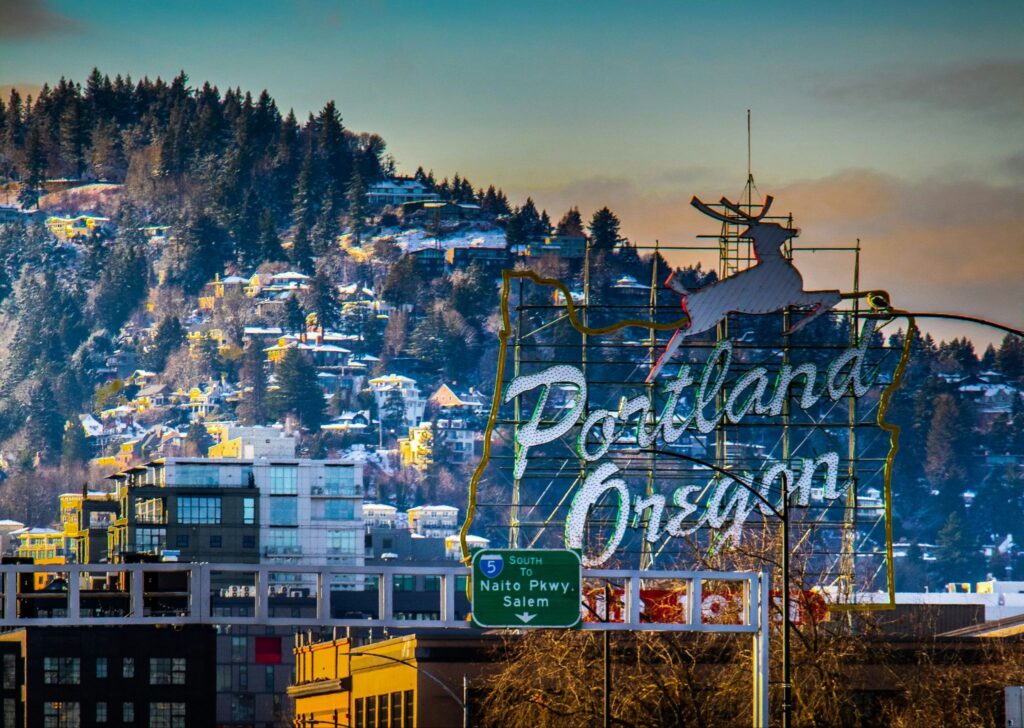
Portland has a high percentage of remote workers with more than 1 in 4 people working remotely. The city basically runs on coffee shops that double as offices, and the “keep Portland weird” vibe means nobody cares if you’re coding in pajamas at 3 PM.
Best for: Creative types, people who love food and beer culture, remote workers who want to be around lots of other remote workers.
Portland’s older housing stock is charming and sometimes unpredictable. You might want to learn about renters insurance in Portland to keep your creative workspace protected.
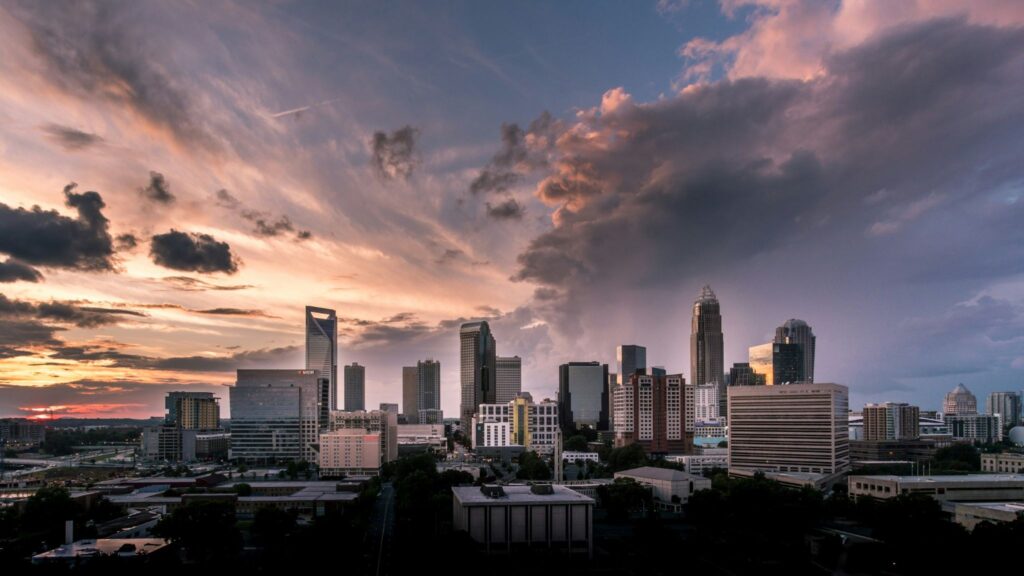
Charlotte’s average salary is the lowest on this list, but that number needs context: the cost of living is also among the lowest, and the city has big-city infrastructure that most places this affordable simply don’t have. Major airport, solid transit, plenty of coworking options, and a genuinely growing tech and finance scene.
Mountains are a few hours west. Beaches are a few hours east. If you want weekend options without committing to one landscape, Charlotte’s location is hard to beat.
It’s one of the South’s quieter success stories for remote work, the kind of city that keeps showing up on these lists because the fundamentals are right, without the hype inflating the cost of living yet.
Best for: People who want big-city amenities at a reasonable price, remote workers in finance or tech, anyone who wants geographic flexibility on weekends.
If this hidden gem sounds like your ideal remote work base, consider getting renters insurance in Charlotte to protect your belongings in this up-and-coming city.
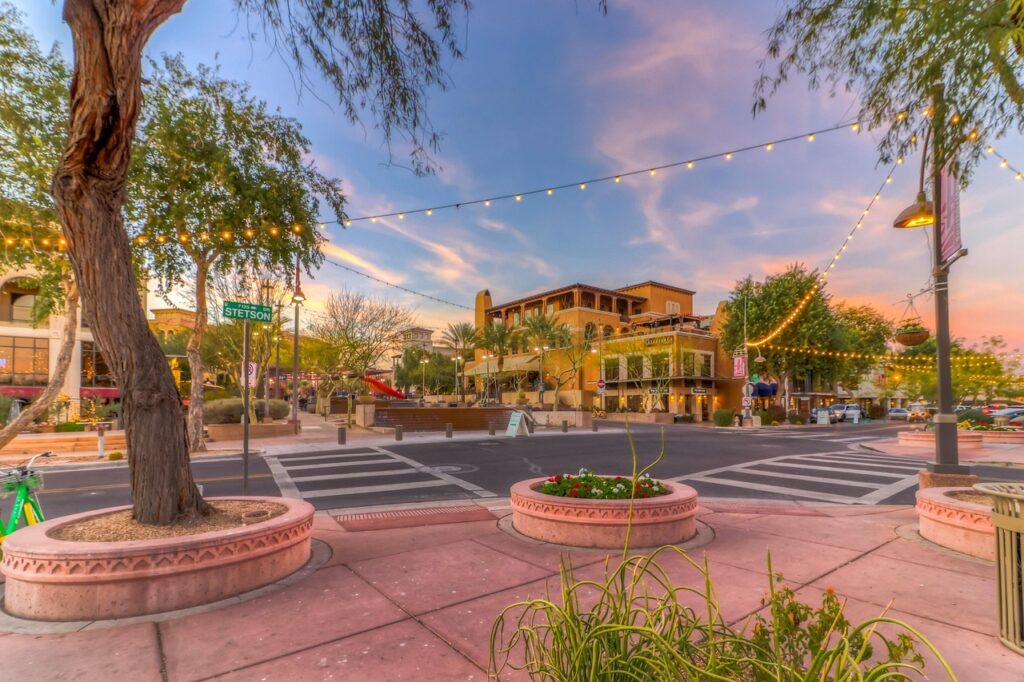
Scottsdale is where you go if you’ve made a deliberate decision that sunshine is non-negotiable. The desert landscape is genuinely stunning, the coworking spaces are surprisingly polished, and the quality of life is high, assuming you like heat.
Summers are extreme. That’s not a caveat, that’s a real factor. Days over 110°F are common in July, and you will spend real time indoors during peak summer. But the winters and spring months are exceptional, and the year-round sunshine draws a productive, wellness-oriented remote work crowd.
No state income tax in Arizona (as of recent policy changes, worth confirming for your situation), and the cost of living is more reasonable than the luxury amenities suggest.
Best for: People who genuinely love heat and sunshine, wellness-focused remote workers, anyone who wants upscale amenities without paying New York prices for them.
Planning to soak up the Arizona sun while you work? Make sure to explore renters insurance options in Scottsdale to protect your belongings in this desert paradise.
The right city can do a lot for your productivity, your mental health, and your finances. Here’s what’s actually worth thinking through.
Your salary looks different depending on where you live. A $75k remote income feels comfortable in Charlotte and stretched thin in San Francisco. Start with a cost-of-living comparison before you fall in love with a city based on vibes alone.
Don’t forget state income tax. Texas, Washington, and Florida have none. That’s a meaningful difference over the course of a year.
Think past work hours. Are there things to do on weekends? Can you get healthcare without a nightmare? If you need outdoor time to stay sane, a dense urban grid won’t work for you long-term. If you thrive on cultural energy, a small mountain town might leave you feeling isolated after six months.
Be honest about what you actually need day-to-day, not just what sounds good on paper.
This one’s non-negotiable for freelancers and digital nomads. Dropped video calls and slow uploads will wreck your workday faster than anything else. Check average speeds, but aim for at least 100 Mbps, but also ask locals about reliability. A 200 Mbps connection that goes down twice a week is worse than a steady 75 Mbps.
Most of the cities on this list have solid infrastructure, but individual neighborhoods can vary. Check before you sign a lease.
Even if you plan to work from home full-time, knowing coworking spaces exist nearby matters. They’re useful when your home internet dies, when you need a change of scenery, or when you just want to be around other people who understand the remote work life. Most of the cities here have a solid range of options, from boutique spots to major national chains.
Ready to make the move? Each of these cities has something different to offer, but they all nail the basics: reliable internet, reasonable costs, and real communities of people who get the remote work life.
Where you end up depends on what matters most to you, whether it’s mountain views, music scenes, desert sunshine, or just really good coffee. Either way, you’ve got options.
It’s more common than you’d think, and most of these cities have infrastructure built for exactly that situation. Coworking spaces are a reliable starting point. They attract remote workers by design, and it’s easier to meet people there than you’d expect. Local meetups, professional communities, and neighborhood Facebook groups also move faster in remote-friendly cities. Give yourself a few months before you judge it.
A rough rule of thumb: one to three months of rent in savings before you go, plus moving costs. If you’re shipping furniture cross-country, get a few quotes. It can be more expensive than people expect. If you’re moving light, it’s much more manageable. Factor in a security deposit, first and last month’s rent, and setup costs for a home office if you don’t already have one.
Often yes. Boulder and Scottsdale both punch above their weight on coworking infrastructure, internet quality, and remote worker community. The tradeoff is usually fewer in-person networking opportunities in specific industries, and sometimes a thinner social scene depending on your situation. For day-to-day remote work functionality, smaller cities often have fewer distractions and lower costs, which is a real advantage.
Coworker.com and Desks Near Me are reliable for browsing options by city before you arrive. Google Maps searches for “coworking space” in a specific neighborhood also surface a lot of options. If a city has a subreddit, and most do, searching there for recommendations gives you real opinions from people who actually use them.
It depends on the city. New York: no, the subway covers everything. Seattle and Portland: you can manage without one, especially in central neighborhoods. Austin, Denver, Charlotte, and Scottsdale: a car makes life significantly easier, and in Scottsdale especially, it’s close to necessary. San Francisco sits somewhere in the middle. Muni and BART cover a lot, but the city’s hills and spread make a car useful on weekends.
A few quick words, because we <3 our lawyers: This post is general in nature, and any statement in it doesn’t alter the terms, conditions, exclusions, or limitations of policies issued by Lemonade, which differ according to your state of residence. You’re encouraged to discuss your specific circumstances with your own professional advisors. The purpose of this post is merely to provide you with info and insights you can use to make such discussions more productive! Naturally, all comments by, or references to, third parties represent their own views, and Lemonade assumes no responsibility for them. Coverage and discounts may not be available in all states.
Share


Please note: Lemonade articles and other editorial content are meant for educational purposes only, and should not be relied upon instead of professional legal, insurance or financial advice. The content of these educational articles does not alter the terms, conditions, exclusions, or limitations of policies issued by Lemonade, which differ according to your state of residence. While we regularly review previously published content to ensure it is accurate and up-to-date, there may be instances in which legal conditions or policy details have changed since publication. Any hypothetical examples used in Lemonade editorial content are purely expositional. Hypothetical examples do not alter or bind Lemonade to any application of your insurance policy to the particular facts and circumstances of any actual claim.