
The Hardest Conversation in Veterinary Medicine: Economic Euthanasia
Clinical framing, honest data, and tools that help.

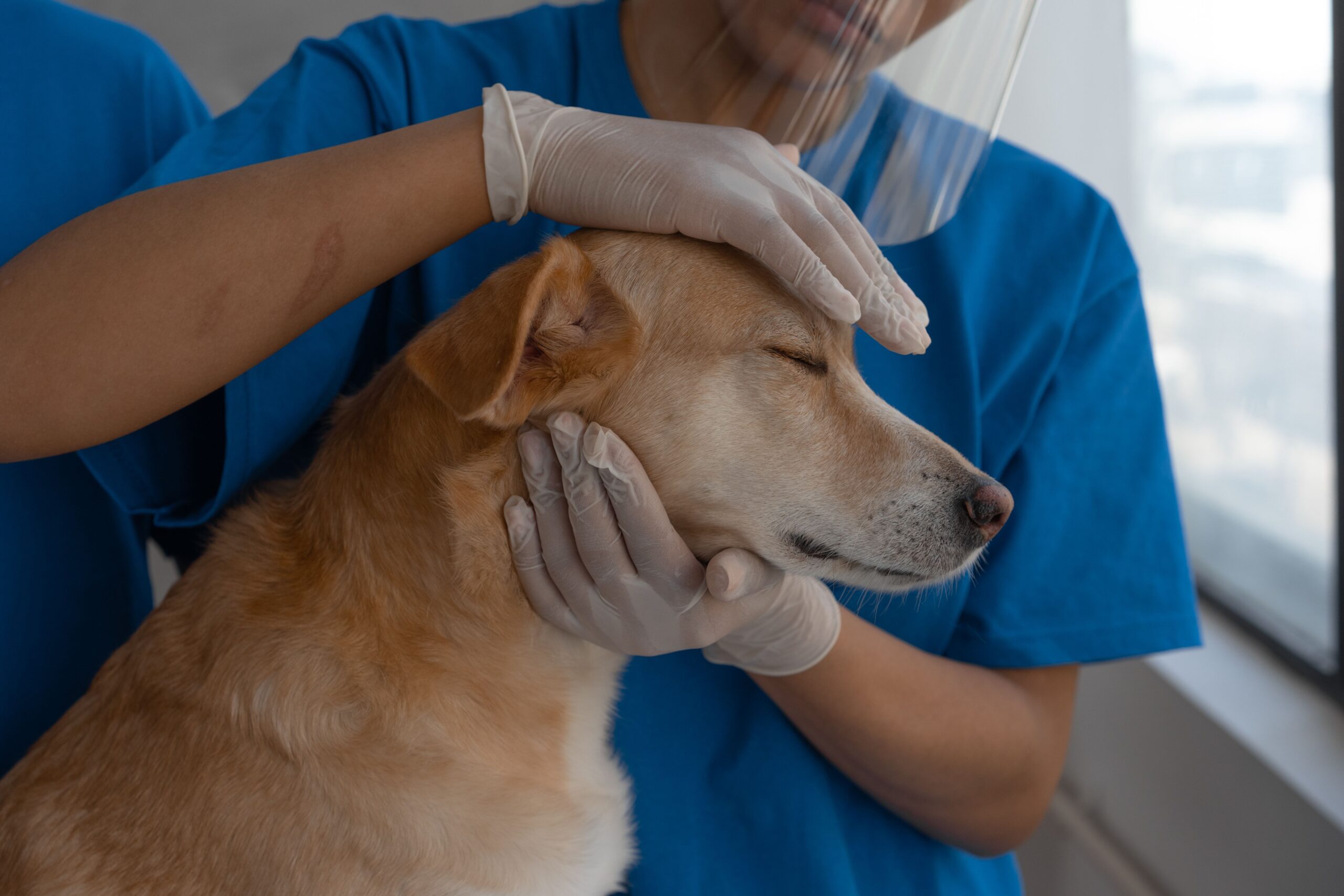
Clinical framing, honest data, and tools that help.
 Reviewed by Dr. Stephanie LiffLast Updated:
Economic euthanasia happens when a pet dies not because medicine has run out of options, but because money has. The animal is treatable. The prognosis is reasonable. And the team is left standing in an exam room knowing that, had the numbers worked out differently, this pet would be going home.
It’s one of the hardest realities in veterinary medicine, and it’s more common than most practices track. If your team hasn’t talked about it openly, they’re carrying it quietly. This article is for DVMs, technicians, and practice managers who want clinical framing, honest data, and tools they can actually use.
 TL;DR
TL;DR
The AVMA euthanasia guidelines define euthanasia as a “good death,” one that minimizes pain and distress. Economic euthanasia, sometimes called financial euthanasia, fits the technical definition but breaks from its spirit: the animal isn’t suffering beyond treatment. The decision is driven by the client’s inability to pay, full stop.
It’s worth separating this clearly from convenience euthanasia, where no medical necessity exists and the request is behavioral or logistical. The moral weight is different. With economic euthanasia, informed consent is technically present, but the choice is constrained in a way that makes it feel less like a decision and more like a wall. That distinction matters for how your team processes it afterward.
The scale of the problem is difficult to track precisely because most practices don’t record it as a distinct outcome. What peer-reviewed data does exist is pointed: a study of GDV cases found that 37% of uninsured dogs were euthanized before surgery, compared to 10% of insured dogs, a stark illustration of how insurance status shapes outcomes in emergency settings where cost conversations happen fast and without preparation. That invisibility in general practice makes the problem easier to absorb individually and harder to address systemically.
Moral injury in veterinary medicine isn’t a buzzword. It’s what happens when a clinician or technician knows the right thing to do and is unable to do it, usually because of a system constraint, including cost. Research draws a direct line between repeated economic euthanasia exposure and moral distress, compassion fatigue, secondary traumatic stress, and eventually veterinary burnout.
The data on veterinary professional wellbeing is sobering. The Merck Animal Health Veterinary Wellbeing Study III found that more than 50% of US veterinarians report high burnout, and peer-reviewed research consistently attributes the primary drivers to work-environment characteristics, including workload, client interactions, and scheduling, rather than individual coping capacity. Economic euthanasia is one of those environmental drivers, and one that repeats.
The gap between the insured and uninsured patient isn’t abstract to anyone who’s worked emergency medicine. One Lemonade Pet claims advocate, who spent years in ER before making the transition, puts it plainly:
“After working in ER, I can confirm many surgeries run upwards of $8,000. I’ve seen people call every friend and family member they have trying to collect payment, take out credit cards, dip into savings and retirement. In the worst cases, I’ve seen true emergencies leave against medical advice, or have to be euthanized to prevent further suffering. Pet parents who had insurance were generally far better prepared to handle these situations than those without.”
– Shelby R, Lemonade Pet Claims Advocate, Registered Veterinary Technician (10 years)
That’s the human version of what the GDV data captures statistically. The same pattern plays out across case types, in practices of every size, every day.
The team member who prepped the catheter, held the pet, or handed the owner a tissue is also carrying something after an economic euthanasia. Post-procedure, that weight often has nowhere to go, especially if the practice hasn’t built a channel for it. That’s a practice management problem, not a personal resilience problem.
Not One More Vet (NOMV) exists specifically to address this crisis. Founded in 2014, NOMV is a 501(c)(3) with a network of 35,000+ members offering peer support through its Lifeboat program, crisis resources, and mental wellness education for veterinary professionals. If you or someone on your team is struggling, nomv.org is a real starting point, not a platitude.
Contextualized care, or spectrum-of-care medicine, is the clinical framework that says there’s rarely only one medically defensible path. The best treatment and the best treatment a client can realistically access aren’t always the same thing, and acknowledging that isn’t lowering the standard of care. It’s practicing it honestly.
The AVMA House of Delegates has formally requested spectrum-of-care resources and policies, framing the approach as critical to expanding veterinary care accessibility, and the AAVMC Spectrum of Care Initiative has developed supporting frameworks for veterinary education. When you offer a client tiered options, “here’s the full workup, here’s a targeted diagnostic approach, and here’s what supportive care looks like at home,” you’re not cutting corners. You’re expanding the decision space so that economic euthanasia isn’t the only off-ramp.
This requires a shift in how estimates are framed. Estimate-first as a practice standard means the cost conversation happens before the treatment plan is presented as a fait accompli, giving clients agency and giving the team a chance to problem-solve together.
Most veterinary teams aren’t trained in financial counseling, and they shouldn’t have to be. But knowing what’s available, and having it ready to hand a client in under two minutes, can change outcomes.
The landscape includes third-party financing tools like CareCredit and Scratchpay, nonprofit grants through organizations like RedRover Relief, The Pet Fund, and Frankie’s Friends, and peer-to-peer fundraising platforms like Waggle. Approval timelines vary, not every client qualifies for every option, and some work better for emergency situations than others.
Rather than navigating that in the moment, keep a one-page resource at the front desk, printed and digital, so the conversation starts fast and without friction. For a full breakdown of how each option works and when to recommend it, this guide to veterinary payment options is worth bookmarking and sharing with your client-facing team.
Not a philosophy statement, a working SOP your practice can start implementing this month.
Add a single field to your intake form: “Does your pet have pet insurance?” If yes, note the carrier. This flag serves two practical purposes: it tells your team where to route paperwork, and it prompts the client to contact their carrier early to confirm coverage eligibility or explore pre-authorization before costs escalate. What it doesn’t do is tell you whether the condition is pre-existing or what the plan will actually cover, so train your team to flag the insurance status without drawing conclusions about reimbursement.
Before presenting a treatment plan, present the cost range. Always. This isn’t pessimistic: it’s informed consent in practice. Clients who know the number upfront are more likely to engage in problem-solving than clients who find out at checkout.
Build templated tiered options into your most common case types: GI, orthopedic, oncology, trauma. Option A is the full diagnostic and treatment path. Option B is targeted diagnostics with the highest-yield tests. Option C is supportive care with a defined monitoring plan. Presenting all three isn’t giving up. It’s giving the client a real choice.
Maintain a one-page resource, printed and digital, listing CareCredit, Scratchpay, RedRover, The Pet Fund, Frankie’s Friends, and Waggle with QR codes or URLs. Update it quarterly. Make sure every client-facing team member knows it exists and can hand it over without hesitation.
After any economic euthanasia, build in a brief, structured check-in with the staff who were in the room. This doesn’t need to be a formal session: ten minutes, a quiet space, a genuine “how is everyone?” with someone who can actually hold the answer. The AVMA’s wellbeing resources and NOMV’s peer support network are worth integrating into your staff debrief protocol for cases that hit harder. Unprocessed moral distress accumulates. The debrief is how you stop it from compounding.
Every intervention above is reactive, a response to a client who’s already at the wall. The highest-leverage upstream move is one your team can take at the very first puppy or kitten visit: recommend pet insurance before anything goes wrong.
Clients who carry pet insurance don’t face the same binary at the hardest moments. Coverage isn’t a guarantee, but it meaningfully widens the decision space. Lemonade Pet is worth knowing by name: 40% of Lemonade Pet claims are handled instantly, which means coverage is more likely to translate into real dollars at the moment of care rather than weeks later. When a client gets reimbursed quickly, insurance becomes a real financial option rather than a distant one.
Recommending pet insurance at wellness visits isn’t a sales pitch. It’s preventive medicine for the financial side of the client relationship, and it’s one of the most concrete things your practice can do to reduce economic euthanasia over time.
A few quick words, because we <3 our lawyers: This post is general in nature, and any statement in it doesn’t alter the terms, conditions, exclusions, or limitations of the policies issued, which differ according to your state of residence. You’re encouraged to discuss your specific circumstances with your own professional advisors. The purpose of this post is merely to provide you with info and insights you can use to make such discussions more productive! Naturally, all comments by, or references to, third parties represent their own views, and Lemonade assumes no responsibility for them. Coverage may not be available in all states. Please note that statements about coverages, policy management, claims processes, Giveback, and customer support apply to policies underwritten by Lemonade Insurance Company or Metromile Insurance Company, a Lemonade company, sold by Lemonade Insurance Agency, LLC. The statements do not apply to policies underwritten by other carriers.
Please note: Lemonade articles and other editorial content are meant for educational purposes only, and should not be relied upon instead of professional legal, insurance or financial advice. The content of these educational articles does not alter the terms, conditions, exclusions, or limitations of policies issued by Lemonade, which differ according to your state of residence. While we regularly review previously published content to ensure it is accurate and up-to-date, there may be instances in which legal conditions or policy details have changed since publication. Any hypothetical examples used in Lemonade editorial content are purely expositional. Hypothetical examples do not alter or bind Lemonade to any application of your insurance policy to the particular facts and circumstances of any actual claim.