

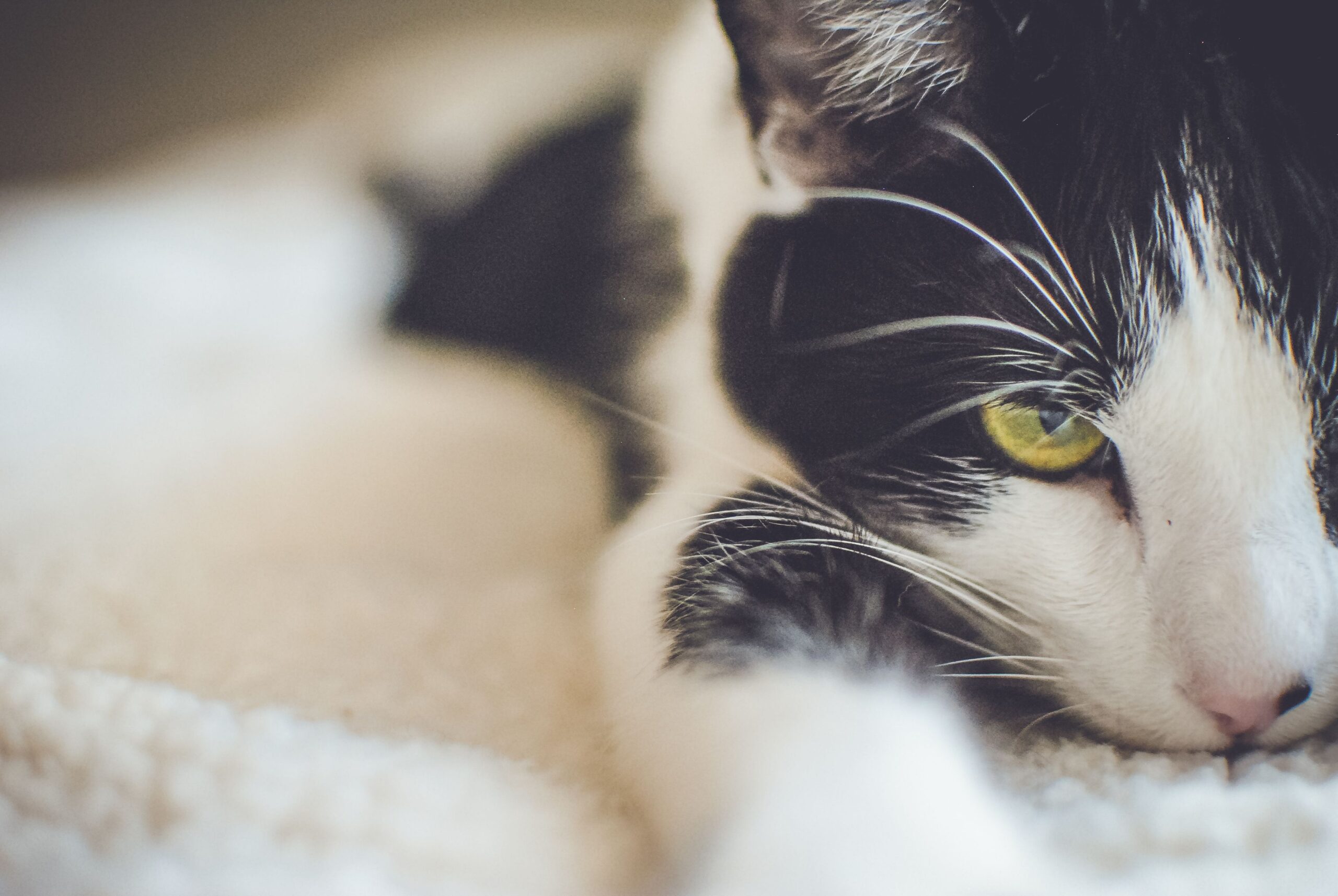
- What is ringworm in cats, exactly?
- What does ringworm look like in cats?
- What causes ringworm in cats?
- How vets diagnose ringworm
- How to treat ringworm in cats
- Your house is part of the treatment
- How long is ringworm contagious in cats?
- Does pet insurance cover ringworm in cats?
- Before we go
- Frequently Asked Questions
If you’ve noticed a patch of missing fur on your cat, round, scaly, and a little crusty at the edges, your first instinct might be to panic. Take a breath. Ringworm in cats sounds alarming, but it’s not actually a worm at all. It’s a fungal infection (called dermatophytosis) that’s very treatable, even if it takes some patience to clear up completely.
The catch: it’s contagious. To your other pets, and to you. The sooner you understand what you’re dealing with, the sooner you can get ahead of it.
 TL;DR
TL;DR
- Ringworm is a fungal infection (dermatophytosis), not a worm. In cats, the culprit is almost always Microsporum canis.
- Early signs: circular patches of hair loss, scaling, and crusty skin. Kittens and long-haired cats are most vulnerable.
- Treatment combines topical antifungals (like lime sulfur dips) with oral medication (like itraconazole) and takes weeks to months.
- Your home needs treatment too. Fungal spores survive in carpets, bedding, and grooming tools. Skip this step and your cat will likely get reinfected.
- Ringworm is zoonotic – it can spread to people. Wash your hands after handling your cat and see a doctor if you develop a similar skin rash.
What is ringworm in cats, exactly?
Ringworm gets its name from the ring-shaped lesion it causes, not from any kind of worm. The actual culprit is a group of fungi called dermatophytes, and in cats, the species responsible about 90% of the time is Microsporum canis. These fungi feed on keratin, the protein found in skin, hair, and nails, which is why the infection shows up as hair loss and skin changes rather than anything going on inside the body.
The fungus spreads through direct contact with an infected animal or person, or through contact with contaminated surfaces. Spores (the tiny reproductive particles the fungus releases) can survive in your home for months. That’s what makes this infection trickier to clear than it might seem.
What does ringworm look like in cats?
Early stage ringworm in cats often starts as a small, slightly scaly patch where the fur looks thin or broken. As it progresses, you’ll typically see:
- Circular lesions – round patches of hair loss, often with a defined edge
- Scaling or flaking skin at the center of the patch
- Redness or inflammation around the border
- Brittle, broken hairs around the affected area
- Occasional crusting or mild itchiness (though cats with ringworm aren’t always itchy)
The most common spots are the face, ears, paws, and tail. Long-haired cats and kittens tend to be more susceptible, as do cats with weakened immune systems. It’s worth knowing that ringworm doesn’t always look like a textbook ring – sometimes it’s just a dull, flaky patch or an area where the coat looks patchy and uneven. When in doubt, see your vet rather than trying to identify it from photos alone.
What causes ringworm in cats?
Your cat picks up ringworm by coming into contact with the fungus:
- Direct contact with an infected cat, dog, or person
- Shared bedding, grooming tools, or food bowls that haven’t been disinfected
- Contaminated soil (the fungus can live outdoors too)
- Shelters or multi-cat environments, where the infection spreads easily
Young cats, elderly cats, and cats on immunosuppressive medications are most at risk. A healthy adult cat with a strong immune system may be exposed and never develop symptoms, but they can still carry and spread the fungus.
How vets diagnose ringworm
Your vet has a few tools for figuring out if ringworm is what you’re dealing with:
- Wood’s lamp – a special ultraviolet light that causes some strains of Microsporum canis to glow a yellow-green color. It’s a quick first check, but not definitive on its own since not all strains fluoresce.
- Fungal culture – hairs and skin cells from the affected area are sent to a lab and grown in a culture medium. This is the most reliable test, but results take 2–4 weeks.
- Microscopic examination – the vet looks at hair samples under a microscope for signs of fungal spores. Faster than a culture, but less accurate.
Don’t skip the vet visit. Other conditions – including allergies, mange, and bacterial infections – can look a lot like ringworm. Treatment only works if you know what you’re treating.
How to treat ringworm in cats
There’s no one-size-fits-all approach, but most vets use a combination of topical and oral treatments. This typically includes:
- Topical antifungals – lime sulfur dips (applied to the whole coat) or antifungal creams and shampoos for localized spots. Lime sulfur smells strong (think rotten eggs), but it’s one of the most effective options.
- Oral antifungals – medications like itraconazole, which work from the inside out to stop the fungus from spreading. These are typically used alongside topical treatment for faster, more thorough results.
- Clipping the fur – your vet may recommend shaving the area around lesions to reduce the spread of spores and improve how well topical treatments penetrate the skin.
Treatment usually runs for several weeks, sometimes longer. Your vet will likely want to do a follow-up fungal culture before officially declaring your cat ringworm-free. Stopping treatment early is one of the most common reasons infections come back.
Your house is part of the treatment
This is the step most owners underestimate, and it’s the one that makes or breaks recovery. Fungal spores shed from your cat’s fur and skin can survive in your home for months, in carpet fibers, on upholstered furniture, in bedding, and on grooming tools. If you treat your cat but not your environment, reinfection is almost guaranteed.
Environmental decontamination should run parallel to your cat’s treatment:
- Vacuum carpets and furniture daily, and immediately dispose of the vacuum bag or empty the canister outside
- Wash all bedding, soft toys, and fabric items your cat contacts in hot water, frequently
- Disinfect hard surfaces with a diluted bleach solution (1:10 bleach to water) — this kills spores on contact
- Replace or thoroughly disinfect grooming tools, collars, and food bowls
- Limit your cat’s access to certain rooms if possible, to reduce how much of the home needs ongoing decontamination
Think of the environment as a reservoir for the fungus. Your cat can’t fully clear the infection if they’re being re-exposed to spores every day.
How long is ringworm contagious in cats?
Your cat stays contagious until treatment clears the infection, and that’s confirmed by a negative fungal culture, not just by how their skin looks. Visually, lesions may appear to heal before the fungus is actually gone. Expect the contagious period to last anywhere from 3 weeks to 3 months, depending on how quickly they respond to treatment.
Since ringworm is zoonotic (it can spread from animals to humans), take some basic precautions during treatment:
- Wash your hands thoroughly after handling your cat
- Avoid letting them sleep in your bed during treatment
- Keep them away from young children or anyone with a compromised immune system
- If you or anyone in your household develops a circular, itchy skin rash, see a doctor
Does pet insurance cover ringworm in cats?
Treating ringworm adds up quickly. Between vet visits, fungal cultures, antifungal medications like itraconazole, and repeated dips or topical treatments over several weeks, you’re looking at a real expense.
Ringworm is covered under Lemonade Pet illness coverage, as long as it’s not pre-existing and develops after the 14-day illness waiting period has passed. If your cat is already showing signs of ringworm, coverage won’t apply to that specific infection. The time to enroll is before symptoms appear, so you’re covered when you actually need it.
Before we go
Ringworm is one of those conditions that’s genuinely manageable once you know what you’re dealing with. It takes consistency: treating your cat, treating your home, and following through until your vet confirms it’s gone. Most cats recover fully. If you’ve spotted early signs, get to your vet soon so you can start treatment and stop the spread.
Frequently Asked Questions
Can I treat ringworm in cats at home without a vet?
You shouldn’t try to manage ringworm on your own. Over-the-counter antifungals aren’t reliable for cats, and other skin conditions can look identical to ringworm. A vet visit ensures the right diagnosis and the most effective treatment plan.
What does early stage ringworm look like in cats?
Early lesions often appear as small, slightly scaly patches where the fur looks thinned or broken. They can be easy to miss at first. The classic circular lesion with a defined edge becomes more obvious as the infection progresses.
How do I know when my cat is no longer contagious?
Your vet will perform a follow-up fungal culture to confirm the infection is cleared. Visual improvement of the skin alone isn’t enough. Two consecutive negative cultures are often used as the benchmark for a clean bill of health.
Can ringworm spread to my other pets?
Yes. Ringworm spreads easily between cats and can also infect dogs. Isolate the affected cat as much as possible during treatment, and ask your vet whether your other pets should be examined or treated preventively.
How long does ringworm treatment take in cats?
Most cases take at least 6 weeks of consistent treatment, and some can take up to 3 months. Stopping early is a common cause of reinfection, so follow your vet’s timeline even when the skin looks healed.
A few quick words, because we <3 our lawyers: This post is general in nature, and any statement in it doesn’t alter the terms, conditions, exclusions, or limitations of the policies issued, which differ according to your state of residence. You’re encouraged to discuss your specific circumstances with your own professional advisors. The purpose of this post is merely to provide you with info and insights you can use to make such discussions more productive! Naturally, all comments by, or references to, third parties represent their own views, and Lemonade assumes no responsibility for them. Coverage may not be available in all states. Please note that statements about coverages, policy management, claims processes, Giveback, and customer support apply to policies underwritten by Lemonade Insurance Company or Metromile Insurance Company, a Lemonade company, sold by Lemonade Insurance Agency, LLC. The statements do not apply to policies underwritten by other carriers.