

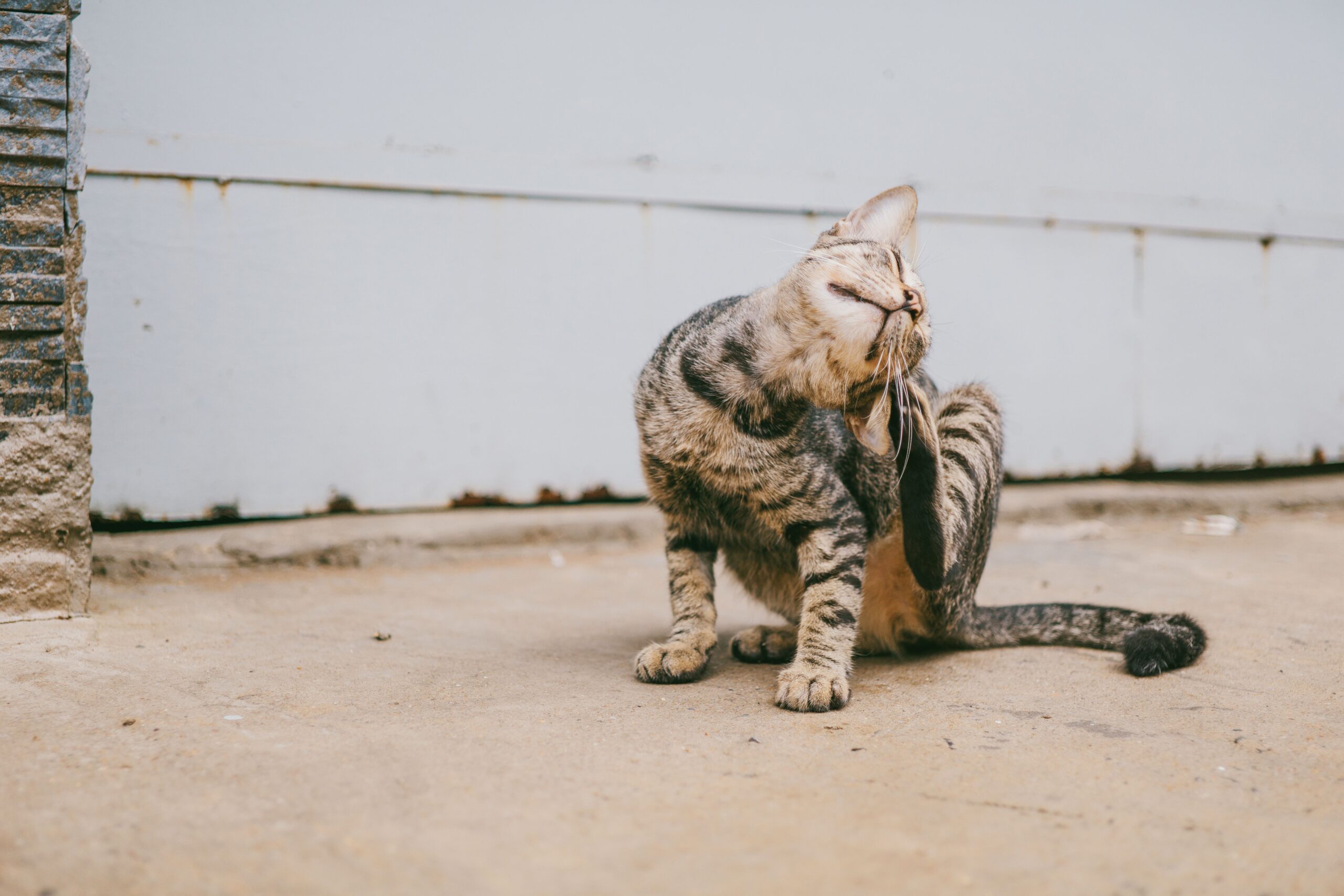
If your cat won’t stop scratching, has patches of missing fur, or is developing crusty, scaly skin around the ears, face, or neck, mange could be the culprit. It sounds alarming, but “mange” isn’t one single disease. It’s a category of skin conditions caused by different types of mites, and knowing which type your cat has makes all the difference in how it gets treated.
Mange in cats is treatable. But some types spread to other pets and people, and home remedies won’t cut it. Here’s what you need to know.
 TL;DR
TL;DR
- Mange in cats is caused by mites, not one disease. The type of mite determines the symptoms, treatment, and whether it can spread to you or other pets.
- The most common and contagious type is notoedric mange (feline scabies), caused by Notoedres cati. It spreads between cats and can temporarily affect humans.
- Signs include intense itching, hair loss, crusting, and thickened skin, usually starting on the head, ears, and neck.
- Diagnosis requires a skin scraping from your vet. Treatment typically involves vet-prescribed products like selamectin or lime sulfur dips. Skip the home remedies.
- Mange is covered under Lemonade Pet illness coverage, as long as it’s not pre-existing and develops after the 14-day illness waiting period has passed.
What is mange in cats?
Mange is a skin infestation caused by microscopic mites that burrow into or live on your cat’s skin. Different species of mites cause different forms of mange, and each one behaves a little differently. Some cause relentless itching, some create crusty buildup, and others are barely noticeable at first. What they share: they all need a vet’s attention to diagnose and treat properly.
The types of mange in cats, and which ones can spread to you
This is where it gets important, especially if you have other pets or kids at home.
Notoedric mange (feline scabies)
Caused by the mite Notoedres cati, this is the most common and most contagious form of mange in cats. It spreads easily between cats through direct contact. It’s also considered zoonotic, meaning it can temporarily affect people. If you’re noticing itchy red bumps on your own skin after handling an infected cat, this could be why. The good news is that Notoedres cati can’t complete its life cycle on humans, so in people, the irritation typically clears up on its own once the cat is treated. That said, other pets in your home, especially rabbits, are at real risk of picking it up.
Demodectic mange (demodicosis)
Caused by Demodex mites, this form is much less common in cats and is generally not considered contagious between cats or to humans. Small numbers of Demodex mites naturally live on most cats without causing issues. Problems typically only develop when a cat’s immune system is compromised, such as with an underlying illness. It tends to cause hair loss and skin irritation but usually less intense itching than notoedric mange.
Otodectic mange (ear mites)
Caused by Otodectes cynotis, these mites live in and around the ear canal. They’re highly contagious between cats and dogs, but not to humans. You’ll usually notice dark, crumbly discharge in the ears (it can look like coffee grounds), head shaking, and scratching at the ears. Technically a form of mange, though most vets discuss ear mites as their own separate condition.
Sarcoptic mange
Caused by Sarcoptes scabiei, this is the classic “scabies” mite that more commonly affects dogs. Cats can get it, but it’s rare. Like notoedric mange, it’s zoonotic and contagious to other animals. Symptoms mirror notoedric mange closely, which is one reason a skin scraping test is essential to identify the exact mite involved.
Signs and symptoms of mange in cats
What you’ll actually see depends on the type of mange, but there are common signs to watch for across most forms. With notoedric mange especially, symptoms often start on the head and spread outward if untreated.
- Intense, relentless itching, often focused on the ears, face, and neck
- Hair loss in patches, which may spread as the infestation progresses
- Thick, crusty, or scaly skin, particularly around the ears and edges of the face
- Reddened, inflamed, or raw-looking skin from scratching
- Restlessness or obvious discomfort
- In early mange, you might only notice mild scratching or a small area of thinning fur
If you’re looking at photos of mange in cats online to compare, keep in mind that presentations vary widely by stage and type. A vet’s diagnosis is always more reliable than a visual match.
How mange in cats is diagnosed and treated
Getting a diagnosis
Your vet will likely perform a skin scraping, where they gently collect a small sample of skin cells and debris from the affected area and examine it under a microscope to identify the mite. It’s quick and not particularly uncomfortable for your cat. This step matters because different mites require different treatments, and guessing wrong wastes time and money while your cat stays miserable.
Treatment options
Your vet will tailor treatment based on which mite is responsible. Some common approaches include:
- Selamectin (sold under brand names like Revolution): a topical medication applied to the back of the neck that works against several types of mites, including Notoedres cati. It’s one of the more commonly used treatments for feline mange.
- Lime sulfur dips: a medicated bath solution that kills mites on contact. It works well but has a strong smell and can temporarily stain fur and surfaces. Your vet will walk you through the process, which typically involves multiple treatments over several weeks.
- Other antiparasitic medications: depending on the mite and your cat’s overall health, your vet may recommend other prescription options.
Skip the home remedies. DIY treatments like coconut oil, apple cider vinegar, or over-the-counter products aren’t effective against mange mites, and some can irritate or harm your cat’s skin further. The only reliable path is through your vet.
If your cat has notoedric or sarcoptic mange, all cats in your household will likely need treatment too, even if they’re not showing symptoms yet. Wash and treat your cat’s bedding and anything they regularly come into contact with.
Does pet insurance cover mange in cats?
Treating mange involves vet visits, diagnostic tests like skin scrapings, and prescription medications that add up fast.
Mange is covered under Lemonade Pet illness coverage, as long as it’s not pre-existing and develops after the 14-day illness waiting period has passed. If your cat already has mange when you enroll, that condition likely won’t be covered. Enrolling before any symptoms appear is what gives you the most coverage flexibility down the road.
Before we go
Mange is uncomfortable and stressful for your cat, but it’s also very treatable with the right vet-prescribed approach. If your cat is scratching constantly, losing fur, or developing crusty skin, don’t wait it out. Get a diagnosis so you know exactly what you’re dealing with and how to handle it.
Frequently Asked Questions
Is mange in cats contagious to humans?
Notoedric mange and sarcoptic mange are considered zoonotic, meaning the mites can temporarily cause itching and irritation on human skin. However, these mites can’t complete their life cycle on humans, so symptoms in people usually resolve once the cat is treated. Demodectic mange and ear mites are not transmissible to humans.
What does early mange in cats look like?
In the early stages, you might notice mild scratching, a small patch of thinning fur, or slight crusting around the ears or face. It can be easy to mistake for allergies or a minor skin irritation, which is why a vet visit and skin scraping are important for an accurate diagnosis.
Can indoor cats get mange?
Yes, though it’s less common. Indoor cats can still be exposed through contact with other animals, new pets brought into the home, or even items that have come in from outside. Mange isn’t limited to outdoor or stray cats.
How long does mange treatment take in cats?
Treatment timelines vary depending on the type of mange and how advanced it is, but most cases require multiple rounds of treatment over several weeks. Your vet will monitor progress and adjust the approach as needed.
Can I use home remedies to treat mange in cats?
No. Home remedies like coconut oil or apple cider vinegar aren’t effective against mange mites and can sometimes make skin irritation worse. Mange requires vet-prescribed treatment to actually clear the infestation.
A few quick words, because we <3 our lawyers: This post is general in nature, and any statement in it doesn’t alter the terms, conditions, exclusions, or limitations of the policies issued, which differ according to your state of residence. You’re encouraged to discuss your specific circumstances with your own professional advisors. The purpose of this post is merely to provide you with info and insights you can use to make such discussions more productive! Naturally, all comments by, or references to, third parties represent their own views, and Lemonade assumes no responsibility for them. Coverage may not be available in all states. Please note that statements about coverages, policy management, claims processes, Giveback, and customer support apply to policies underwritten by Lemonade Insurance Company or Metromile Insurance Company, a Lemonade company, sold by Lemonade Insurance Agency, LLC. The statements do not apply to policies underwritten by other carriers.