

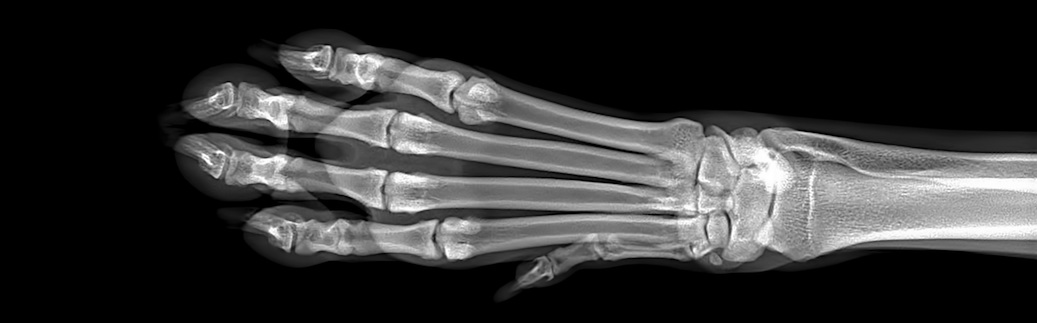
The national average, according to Lemonade claims data, is $303. That’s grounded in real invoices from over 79,000 unique dog claims, not estimates.
 TL;DR
- Dog X-rays typically cost around $150-$500, with a national average of $303 based on real Lemonade claims data
- The biggest cost drivers are body part being examined, sedation, clinic type, and where you live
- If you live in D.C., CA, or NY you’re probably paying 50-100% more than people who live in the South and Midwest
- Pet insurance can cover a significant portion of the bill, but only if symptoms for the underlying condition appear after you enroll and pass your waiting periods
What affects the cost of a dog X-ray?
Dog X-ray cost usually depends on how many images your vet needs, what body part is being checked, and whether your dog can stay still without sedation. A few specific factors tend to move the needle most:
The body part being imaged
Some body parts take more pictures than others. Your vet may need to shoot a joint, a tooth, or the spine from a few different angles, so the more views required, the higher the total.
Sedation
Most routine X-rays don’t require sedation, the technician positions your dog manually. Sedation ($100 to $500 depending on dog size and other factors) is added when the dog is in pain and can’t be positioned comfortably, or is aggressive or extremely anxious.
The amount of anesthesia required depends on your dog’s weight, so the size of your dog will determine the cost of sedation if it is necessary.
Clinic type and location
Location plays a role, with urban clinics and emergency hospitals typically charging higher rates than rural or general practice vets. The type of facility, whether it’s your regular veterinarian, an emergency vet, or a specialty hospital, also makes a difference.
Number of images
An X-ray charge usually covers the imaging (2–3 views from different angles), positioning by the technician, and digital image processing. Some clinics include radiologist interpretation in the X-ray price; others charge it separately.
What can (and can’t) a dog X-ray diagnose?
X-rays are a strong first tool. They’re fast, relatively affordable, and don’t require the advanced equipment that CT scans or MRIs demand. X-rays are commonly used to diagnose everything from fractures and joint issues to swallowed objects or tumors, offering a quick and noninvasive look inside your dog’s body.
That said, they have real limits. X-rays are excellent for viewing bones, foreign objects, and organ size, but they often show soft tissue or inner heart structures poorly. In these cases, your vet might suggest an ultrasound, CT, or MRI.
How does a dog X-ray cost compare to other imaging?
If your vet mentions advanced diagnostic imaging, here’s what to expect:
| Imaging type | Cost range | What it sees best |
|---|---|---|
| X-ray | $75 to $500 | Bones, lungs, swallowed objects, gross organ size |
| Ultrasound | $300 to $880 | Soft tissue, organ structure, heart, fluid, pregnancy |
| CT scan | $500 to $1,200 | Detailed bone, chest, and complex 3D anatomy |
| MRI | $1,000 to $3,200 | Brain, spinal cord, and soft-tissue detail |
CTs and MRIs almost always require general anesthesia and a specialty center, which explains why they cost several times more than a standard X-ray.
CT scans are quick, usually about 10 minutes. MRIs can run close to an hour, which means more time under anesthesia and a steeper bill.
Your vet will likely recommend blood work on your dog’s liver and kidney function before administering anesthesia to make sure they’re healthy enough for sedation. Blood work can cost between $100 and $200.
What Lemonade pet parents actually paid for dog X-rays
The figures below come from real invoices submitted to Lemonade during the claims process over the last 12 complete months, across more than 79,000 unique dog claims.
National average (dogs): $303.48 | Median: $282.35
Here’s how much dog owners in your state actually paid, based on real Lemonade claims. We’ve included the state average, median, and largest city average where we had enough data. No city listed means the sample size wasn’t big enough to report reliably.
| State | Avg. cost | Median | Top city | City avg. |
|---|---|---|---|---|
| Alabama | $192.89 | $183.76 | Birmingham | $233.26 |
| Arkansas | $163.24 | $145.50 | Little Rock | $192.87 |
| Arizona | $330.92 | $320.00 | Phoenix | $362.18 |
| California | $356.50 | $337.58 | Los Angeles | $338.99 |
| Colorado | $296.70 | $289.00 | Denver | $352.85 |
| Connecticut | $297.79 | $275.00 | Hartford | $300.02 |
| Washington D.C. | $401.40 | $382.50 | Washington | $387.07 |
| Delaware | $259.27 | $285.00 | Wilmington | $311.25 |
| Florida | $282.74 | $268.75 | Miami | $303.87 |
| Georgia | $274.74 | $250.00 | Atlanta | $318.13 |
| Hawaii | $311.24 | $301.10 | Honolulu | $290.92 |
| Iowa | $218.64 | $199.18 | Des Moines | $288.19 |
| Illinois | $304.81 | $286.00 | Chicago | $364.81 |
| Indiana | $241.50 | $214.00 | Indianapolis | $256.74 |
| Louisiana | $182.51 | $167.96 | — | — |
| Massachusetts | $341.34 | $322.00 | Boston | $387.64 |
| Maryland | $284.50 | $277.76 | Baltimore | $294.59 |
| Maine | $281.84 | $267.10 | — | — |
| Michigan | $226.63 | $204.00 | Detroit | $242.98 |
| Minnesota | $294.19 | $275.00 | Minneapolis | $317.03 |
| Missouri | $460.50* | $210.00 | St. Louis | $259.96 |
| Mississippi | $176.01 | $162.00 | Jackson | $161.75 |
| Montana | $216.63 | $210.00 | Billings | $227.10 |
| North Carolina | $249.91 | $241.20 | Charlotte | $276.31 |
| North Dakota | $209.45 | $204.00 | Fargo | $211.37 |
| Nebraska | $223.12 | $215.00 | Omaha | $261.82 |
| New Hampshire | $280.98 | $293.50 | Manchester | $284.32 |
| New Jersey | $340.49 | $314.30 | Newark | $346.67 |
| New Mexico | $239.27 | $225.00 | Albuquerque | $275.31 |
| Nevada | $295.15 | $286.66 | Las Vegas | $302.40 |
| New York | $340.71 | $322.00 | New York City | $376.89 |
| Ohio | $258.50 | $238.98 | Columbus | $266.55 |
| Oklahoma | $214.83 | $205.00 | Oklahoma City | $228.91 |
| Oregon | $283.85 | $277.18 | Portland | $303.10 |
| Pennsylvania | $273.35 | $255.00 | Philadelphia | $330.40 |
| Rhode Island | $273.55 | $250.00 | Providence | $270.78 |
| South Carolina | $270.28 | $270.00 | Greenville | $265.34 |
| Tennessee | $245.93 | $235.00 | Nashville | $278.86 |
| Texas | $282.56 | $260.00 | Dallas | $298.78 |
| Utah | $271.50 | $260.00 | Salt Lake City | $296.29 |
| Virginia | $314.55 | $290.00 | Virginia Beach | $255.80 |
| Washington | $315.47 | $304.50 | Seattle | $350.10 |
| Wisconsin | $258.48 | $234.36 | Milwaukee | $279.62 |
A few patterns worth noting:
- Coastal metros run significantly higher. Boston ($387.64), Washington D.C. ($387.07), and New York City ($376.89) are the priciest cities in the dataset.
- Major cities often cost more than the state average. Chicago ($364.81) runs well above Illinois‘s state average of $304.81, Phoenix ($362.18) does the same in Arizona ($330.92).
- The South and Midwest remain the most affordable. Arkansas ($163.24), Louisiana ($182.51), Mississippi ($176.01), and Alabama ($192.89) are consistently the lowest-cost states.
- X-rays for dogs and cats cost virtually the same. Nationally, dogs average $303.48 and cats $303.58. The cost driver is the clinic and complexity, not the species.
How to lower your dog’s X-ray bill
You don’t always have control over what your dog needs, but you do have options.
- Go to your regular vet when it’s not an emergency. You’ll typically pay less at your local or regular vet than at an emergency clinic or hospital.
- Ask about sedation upfront. Most routine X-rays don’t require sedation. If your dog is calm, ask whether it’s truly needed before agreeing.
- Ask if the radiologist read is included. Some clinics include radiologist interpretation in the X-ray price; others charge it separately. Worth asking before you check in.
- Call ahead if it’s not urgent. If your dog’s X-ray need isn’t an emergency, you could call around about pricing and decide where to take your dog based on what you learn.
- Enroll in pet insurance before anything happens. More on that coming up.
Does pet insurance cover dog X-rays?
Yes, as long as it’s performed for a covered event. Accident and illness coverage is built for things like a swallowed sock, a limp, or a lump that needs a closer look, and X-rays are part of that when they’re used to diagnose or treat one of those.
With Lemonade Pet, X-rays are included in the base accident and illness policy. You pay your vet, file a claim, and get back a portion of covered costs based on the reimbursement rate and deductible you picked, usually 70-90%.
The one thing to know: pre-existing conditions aren’t covered. If symptoms show up before you enroll, or during your waiting periods, imaging for that condition won’t be covered. Signing up while your dog is healthy is what makes this work in your favor. If the X-ray is for a covered event, a $300 bill could drop to $30-$90.
The bottom line
A dog X-ray is one of those vet bills that catches people off guard, not because it’s catastrophic, but because it shows up fast, often alongside other costs like a consultation fee or blood work.
The good news: it’s one of the most reimbursable expenses a pet insurance plan covers. If you’re not insured yet, now’s a smart time to look into it, before your dog’s next adventure, mishap, or mystery limp turns into an out-of-pocket surprise.
Frequently asked questions
How much does a dog X-ray cost without insurance?
Based on Lemonade claims data from over 79,000 dog claims, the national average is $303, with a median of $282. Prices range from under $175 in states like Alabama and Mississippi to over $400 in D.C. and California.
Do all dog X-rays require sedation?
Most routine X-rays do not require sedation. Sedation is added when the dog is in pain and can’t be positioned comfortably, or is aggressive or extremely anxious. If sedation is needed, expect to add 50–250 to your bill depending on your dog’s size.
What's the difference between a dog X-ray and an ultrasound?
X-rays are best for bones, lungs, swallowed objects, and organ size. Ultrasounds are better for soft tissue, organ structure, heart, fluid, and pregnancy, and typically cost $300-$700.
Does Lemonade pet insurance cover dog X-rays?
Yes. X-rays are covered under Lemonade’s accident and illness plan. To make sure you’re covered when you need it, enroll before any symptoms appear. Coverage doesn’t apply to pre-existing conditions.
Is a dog chest X-ray more expensive than a leg X-ray?
Generally yes. Chest and abdominal X-rays often require more views, which means more images and a higher bill. A leg X-ray for a suspected fracture tends to be simpler and land at the lower end of the cost range.
A few quick words, because we <3 our lawyers: This post is general in nature, and any statement in it doesn’t alter the terms, conditions, exclusions, or limitations of policies issued by Lemonade, which differ according to your state of residence. You’re encouraged to discuss your specific circumstances with your own professional advisors. The purpose of this post is merely to provide you with info and insights you can use to make such discussions more productive! Naturally, all comments by, or references to, third parties represent their own views, and Lemonade assumes no responsibility for them. Coverage may not be available in all states. Cost data referenced in this article reflects the average of relevant line items from invoices submitted to Lemonade during the claims process between October 2025 and September 2026. State and city-level averages are included only where a minimum of 15 claims were submitted during that period. Figures represent averages and individual costs will vary based on location, facility type, procedure complexity, and other factors.