

Insurance provides homeowners and landlords with financial protection and a feeling of security. But determining which policy is right for you means understanding the differences between homeowners and landlord insurance.
 TL;DR
TL;DR
- Homeowners insurance is for properties you live in; landlord insurance is for properties you rent out
- Homeowners insurance covers your personal belongings; landlord insurance doesn’t cover tenant belongings
- Both cover the building structure and personal liability
- Tenants need their own renters insurance for their personal belongings
Landlord policy vs. homeowners policy coverage
While both landlord and homeowners insurance are purchased by property owners, what they cover and whom they’re meant for aren’t entirely the same. For starters, homeowners insurance covers owner-occupied properties, whereas landlord insurance covers properties that the owner rents out.
Let’s take a closer look at how coverages differ, and where they’re similar.
Landlord insurance covers structural damage, while homeowners insurance includes more extensive personal property coverage
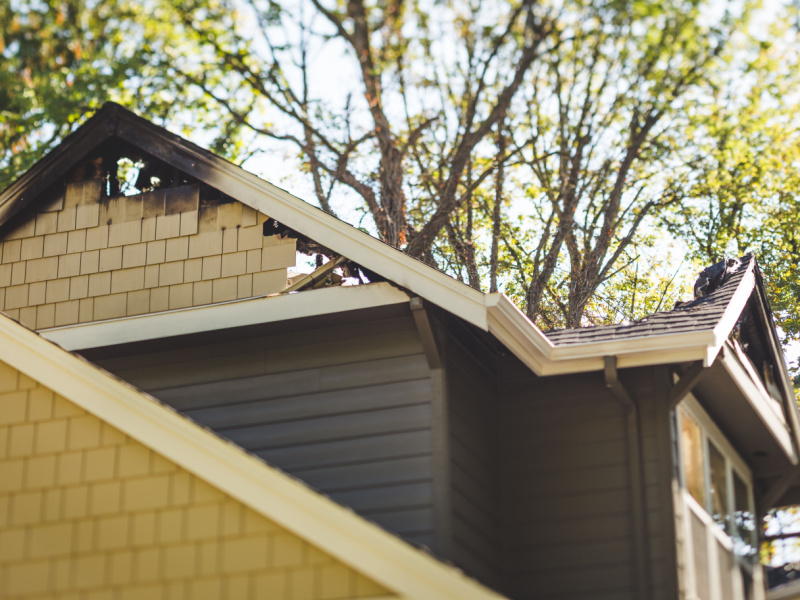
Landlord insurance and homeowners insurance both cover damage to the structure of a property, such as damage from windstorms, hail, lightning, theft, or vandalism. It usually includes some form of personal property coverage for landlord-owned property, like refrigerators, washers, dryers, and other appliances and tools.
Homeowners insurance covers homeowners’ personal belongings, but landlord insurance generally doesn’t cover the personal property of those living on the property. To protect their personal belongings against covered losses, tenants need renters insurance.
Homeowners and landlord insurance both include loss of use coverage
Loss of use means that if a property is unlivable and residents are forced to evacuate, insurance companies step in to compensate. But this results in different scenarios for homeowners and landlords. When it comes to what homeowners insurance covers, loss of use usually covers any necessary hotel or lodging costs and additional living expenses beyond a household’s normal budget.
For landlords, damage makes it impossible for tenants to live on their property, resulting in a loss of rental income. Therefore, landlord insurance can help compensate landlords for lost income, but it won’t be able to cover tenants’ extra living expenses.
Both include personal liability protection

While the details of personal liability protection may vary by policy and insurance type, most of the time liability insurance is included in some form for both homeowners and landlord insurance. Personal liability protection covers injuries or accidental property damage that occur on rental and homeowners’ properties and in some cases, legal fees and court costs.
For example, if a delivery person trips and falls on some black ice and needs medical care, both homeowners and landlords are typically covered for liability if the injury happened on their property.
Landlord insurance vs. homeowners insurance cost
Lemonade’s homeowners insurance is available for prices starting as low as $25/month. We also offer landlord insurance to owners of condos and apartments in NY, IL, TX, PA, NJ, and Washington, D.C., starting from approximately $25/month.
According to the Insurance Information Institute, on average, landlord insurance costs about 25% more than homeowners insurance for the same property. The reason for this is because there are more risks associated with tenant-occupied buildings, including damage to the property caused by renters or their guests, than with those who own and live in their own homes.
However, keep in mind that insurance plans can be customized to your specific needs, and what you’ll pay for coverage depends on a range of factors, including the location of your property, its condition, and the deductible you select.
Do you need landlord or homeowners insurance?
Landlord and homeowners insurance are not mandated by law, although if you get a mortgage for a home you’ll either occupy or rent out, you’ll be required to obtain homeowners or landlord insurance. And even if you don’t have a mortgage, getting covered is a no-brainer, since you don’t want to be on the hook for huge, unexpected costs.
If you’re a homeowner and you plan to offer short-term rentals, such as through Airbnb, you’ll need additional coverage. Some homeowners insurance companies offer this additional coverage or separate policies altogether. And while Airbnb does offer up to $1 million in coverage per rental, it doesn’t cover everything.
Being a property owner in any capacity is a worthwhile investment. But before you begin your journey as a property owner, it’s important to understand the risks and costs associated with doing so, as well as what landlord and homeowners insurance does and doesn’t cover. Fortunately, Lemonade’s got your back every step of the way, from finding you the best insurance policy and helping compensate you when an unfortunate incident occurs.
Which policy is right for your situation?
The right coverage depends on how you use your property. Here are five common scenarios to help you figure out where you stand.
You own and live in your home full-time
If you own a single-family home and live in it as your primary residence, homeowners insurance is the right fit. It covers your home’s structure, your personal belongings (furniture, electronics, clothing), and your personal liability if someone gets injured on your property. It also includes additional living expenses if a covered event forces you to temporarily move out.
You own a property and rent it out to long-term tenants
If your property is occupied by tenants under a lease, whether it’s a house, condo, or apartment, you need landlord insurance (also called dwelling fire insurance or rental property insurance). It covers the building structure, your appliances, and your liability as the property owner. It also replaces lost rental income if the property becomes uninhabitable due to a covered event. Your tenants will need their own renters insurance for their belongings.
You’re converting your primary home into a rental property
If you’ve decided to move out and rent your former home to tenants, you’ll need to transition from homeowners insurance to landlord insurance. Staying on a homeowners policy after the property becomes tenant-occupied creates a coverage gap — most homeowners policies explicitly exclude rental activity. Notify your insurer before tenants move in to make sure you have continuous, appropriate coverage.
You own a duplex and live in one unit while renting the other
This mixed-use situation is more nuanced than a straightforward rental or owner-occupied home. Standard homeowners insurance may cover owner-occupied multi-family homes in some cases, but you may need a homeowners policy with a rental endorsement, or a hybrid policy designed for owner-occupied rental properties. Check with your insurer to confirm that both your unit and the tenant’s unit are adequately covered.
You rent your home on Airbnb or VRBO occasionally
If you rent your primary residence for short stays while you’re away, your standard homeowners policy may not cover rental-related incidents. You’ll likely need a short-term rental endorsement or a separate vacation rental policy. Platform guarantees like Airbnb’s AirCover provide some protection, but they don’t replace comprehensive insurance coverage.
Landlord vs. homeowners insurance FAQs
What is the main difference between landlord insurance and homeowners insurance?
Homeowners insurance is designed for owner-occupied properties. It covers the structure, your personal belongings, and your liability as the person living there. Landlord insurance is for properties you rent out to tenants. It covers the building and any landlord-owned appliances, but not what your tenants own. For that, tenants need their own renters insurance policy.
Can I use homeowners insurance if I rent out my property?
No. If tenants are living in your property, a standard homeowners policy typically won’t cover rental-related risks. You’d need to switch to landlord insurance, which is built for tenant-occupied properties. Staying on a homeowners policy after renting out your home creates a real coverage gap and can result in denied claims.
Does landlord insurance cover my tenant's belongings?
No. Landlord insurance covers the building structure and any appliances you own as the landlord. Your tenant’s furniture, electronics, and clothing aren’t included. If your tenants want coverage for their stuff, they’ll need their own renters insurance policy.
What does "loss of use" mean in homeowners vs. landlord insurance?
The concept is the same, but the payout works differently. With homeowners insurance, loss of use covers your extra living expenses, like hotel stays and meals, if you can’t live in your home after a covered event. With landlord insurance, it covers your lost rental income while the property is being repaired and your tenants can’t live there.
What insurance do I need if I rent my home on Airbnb or VRBO?
Standard homeowners insurance may not be enough if you’re hosting short-term guests. You’ll likely need a short-term rental endorsement added to your existing policy, or a separate vacation rental policy. Airbnb’s AirCover provides up to $1 million in host protection, but it doesn’t cover every situation, so supplemental coverage is worth looking into.
A few quick words, because we <3 our lawyers: This post is general in nature, and any statement in it doesn’t alter the terms, conditions, exclusions, or limitations of the policies issued, which differ according to your state of residence. You’re encouraged to discuss your specific circumstances with your own professional advisors. The purpose of this post is merely to provide you with info and insights you can use to make such discussions more productive! Naturally, all comments by, or references to, third parties represent their own views, and Lemonade assumes no responsibility for them. Coverage may not be available in all states. Please note that statements about coverages, policy management, claims processes, Giveback, and customer support apply to policies underwritten by Lemonade Insurance Company or Metromile Insurance Company, a Lemonade company, sold by Lemonade Insurance Agency, LLC. The statements do not apply to policies underwritten by other carriers.