 Team Lemonade
From October 31 through November 12, world leaders will meet in Glasgow for COP26, aiming to build out a global response to climate change. Needless to say, it’s a big deal—the countries involved essentially get to decide what level of action is taken on climate change around the world.
‘COP’ stands for ‘Conference of the Parties,’ which is the umbrella term for all governments involved in the UN Framework Convention of Climate Change (UNFCCC). Once a year, these governments come together to evaluate progress, and identify how much still needs to be done.
Here are a few things to know in advance of the world’s most important climate meeting, courtesy of Lemonade’s Giveback partners, 350.org.
COP is why 1.5 degrees celsius became one of the most important targets
Back at COP21 in 2015, a breakthrough happened, and the world’s first climate agreement was formed. More commonly known as the Paris Agreement, it brought almost 200 nations together to reduce country-level emissions in order to keep worldwide temperature rise under 1.5 degrees celsius.
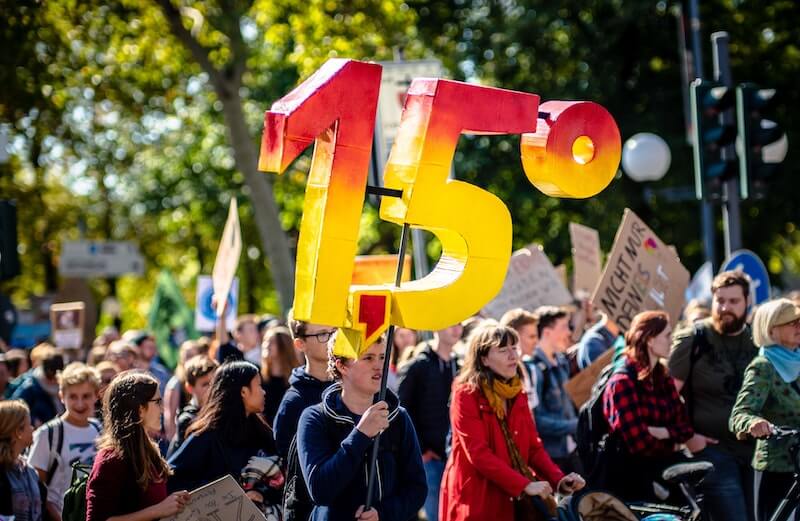
Keeping temperatures below 1.5°C helps limit the worst effects of climate change, like droughts, floods and heat waves, among others. This was a significant moment in history and a lot of people pinned their hopes for the climate to this agreement. While the United States pulled out of the Paris Agreement under Trump, the country has since rejoined.
Not all countries are equally responsible for climate change
The Paris Agreement faced several challenges. All 200 countries needed to be moving in the same direction to decrease emissions, but not all countries actually contribute the same amount of emissions.
Although each country that signed the Paris Agreement is responsible for submitting a climate plan every five years (called an NDC), the concept of “fair share” needs to be taken into consideration.
Fair share means that if a rich, developed country has historically emitted a substantial amount of greenhouse gas pollution, it should aim to cut those emissions as quickly as possible. Plus, these wealthier countries need too financially support emissions reductions in developing countries, contributing their ‘fair share’ towards the Paris Agreement.
But that hasn’t gone according to plan. That’s why this year, assessing the efforts of richer countries and their contributions will be a main topic at COP26.
China and the US delivered a sliver of hope in 2021
The months leading up to COP are almost as important as the actual meeting.
There are a series of events, attended by world leaders, that start to set the tone for how COP negotiations will go. Recently, two notable things happened:
- At the UN General Assembly in September, China made a surprise announcement that it would stop building new coal plants abroad.
- During the same meeting the US committed to doubling its climate finance contribution to help developing nations deal with climate change.
It’s sweeping commitments like these—addressing fossil fuel usage and how to lessen the financial burden for developing countries—that will help nations actually begin to meet the Paris Agreement’s goals.
Don’t despair: Climate activism is making a difference
For the past 26 years, while world leaders have been debating emissions reductions, activists have been vigilant.
The climate movement has been making sure that the media is covering the climate crisis, putting pressure on world leaders to transition away from fossil fuels and toward renewable energy, and making sure that the stories of people most impacted by climate change are heard—above all the rhetoric and empty promises.
And COP26 will be no different! Keep a look out for a global wave of demonstrations calling on financial institutions to stop funding the climate crisis and start funding a just transition to renewable energy, everywhere.