 Shai Wininger
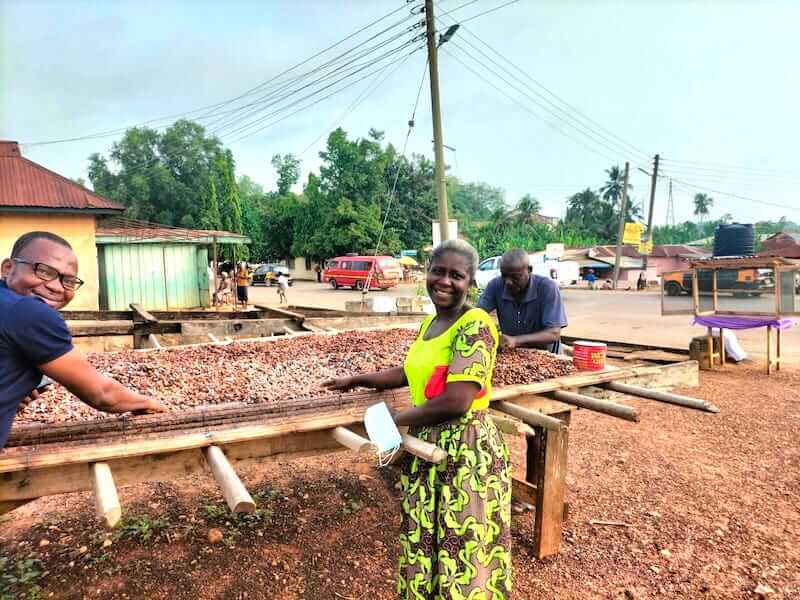
In Africa alone, there are around 300 million smallholder farmers, the majority of whom aren’t financially protected against crippling climate risks such as floods and drought.
Smallholder farmers are especially vulnerable to drought because many don’t have access to irrigation technology and rely on rainfall for their crops. That makes the basis of their livelihood, and main source of food, incredibly precarious.
This is typically where insurance can be very valuable, but in this part of the world, weather insurance is either too expensive, or non-existent. In low-income countries, less than 3% of the farmer population ends up obtaining agricultural insurance, according to the November 2021 ISF Report.
For insurance companies that rely on traditional tools for distribution, pricing, and claim handling, protecting smallholders from devastating climate events often isn’t financially viable. A lack of meteorological infrastructure for example, amplifies this even more. In Africa, there are far fewer weather monitoring stations on the ground than in Europe or the US, and almost 90% less than the minimum recommended by the World Meteorological Organization.
This absence of data means weather forecasts are often inaccurate, and there are barely any early-warning systems for cyclones, droughts, and intense floods.
This deters both insurers and reinsurers from doing business in emerging markets, making insurance either unavailable, or too expensive, for the people who need it most.
The Lemonade Crypto Climate Coalition, funded by the Lemonade Foundation, was formed to tackle this problem by solving three main challenges: accurately quantifying weather risks; automating claim assessment; and providing adequate funding and reinsurance.
The Lemonade Crypto Climate Coalition brings together industry-leading partners with expertise in various fields to work together on solving these challenges. Avalanche, Chainlink, and DAOstack will contribute their vast knowledge of blockchain technology while Lemonade, Etherisc, Hannover Re, and Pula will build highly accurate, fully automated weather insurance models.
The coalition is being constituted as a Decentralized Autonomous Organization (DAO), dedicated to building and distributing insurance at-cost, based on an eco-friendly, proof-of-stake blockchain.
The Lemonade Crypto Climate Coalition will focus on innovating the following:
Accurately quantifying risks
Instead of rainfall or other weather data, the crop protection offered by the LCCC is built around something called “area yield index.”
Essentially, what we do is take a chunk of farmed land—for the sake of argument, let’s say it’s an area that’s 20 by 20 miles, and contains around 1,000 one-hectare farms. By sampling just a small portion of the farms within our 20 by 20 mile zone (let’s say five), it’s possible to make pretty accurate predictions about the crop yield for all of the farms within the zone. At the moment this sampling is done on-site, by humans, but future automation is certainly possible here.
If those sampled farms didn’t hit that target, then all 1,000 farms within the broader zone would receive a crop insurance payout—instantly. No waiting for months or years, and no depending on faulty proxies (like weather data) to determine whether a crop failed or thrived in a given season.
Automating claim assessment
By parametrically measuring the amount of rain, or lack thereof, in an insured field of crops, smart contracts will trigger flood or drought claims automatically, paying farmers without them ever needing to file a claim. The use of autonomous smart contracts and highly accurate weather feeds bring the cost of handling claims down to zero.
Funding and reinsurance
Using the blockchain as a platform, a capital pool will be created to provide insurance capacity. Crypto investors will be able to stake capital in the pool, and potentially receive a share of the premium paid by farmers. Using blockchain in this way will substantially reduce the cost of capital and reinsurance, lowering the cost of insurance even further.
We’re excited by this rare opportunity to bring together some of the most innovative companies on the planet to solve a pressing problem. While all coalition members have their own everyday businesses, this is a unique opportunity to join forces and make a collective impact.
This is also a defining moment for blockchain, which will be used to help protect the most vulnerable farmers from unpredictable and catastrophic climate events.
 Daniel Schreiber
 Team Lemonade